
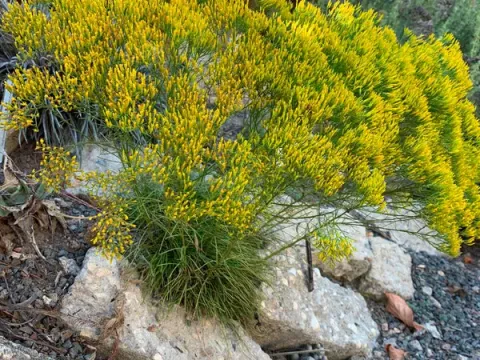
Bigelowia
Bigelowia
Bigelowia is a perennial plant that typically requires a period of cold stratification to ensure successful germination. Seeds are very fine and should be sown on the surface of the soil rather than buried deep, as light is often a trigger for germination.
What the section contains


Bigelowia
The ideal time to sow seeds in the ground is in early spring once soil temperatures have consistently reached 10–15 degrees Celsius. For nursery production, seeds can be started indoors in trays about two months before the final frost date in your region.
Vegetative propagation is also possible through division of established clumps, usually performed in early spring or autumn. When dividing, it is important to ensure that each section has a healthy root system and to water the new plantings thoroughly to facilitate establishment.
Selecting the right site is crucial, as Bigelowia is highly sun-loving. Overcrowding should be avoided during sowing, as plants require good air circulation to prevent the stems from becoming leggy or weak under unfavorable light conditions.
In natural settings, Bigelowia spreads by wind-dispersed seeds, which can lead to self-seeding in a garden environment. If you want to maintain a tidy space, it is recommended to monitor seed heads and harvest them before they disperse naturally.
Bigelowia belongs to the Asteraceae family and is native to North America. It is evolutionarily adapted to thrive in harsh environments, often found in dry, sandy, or disturbed soil types where other plants might struggle to survive.
The most important requirement for this plant is excellent drainage. Sandy or gravelly soil types are preferred, as the plant is highly susceptible to root rot if it remains in waterlogged conditions for extended periods.
This species is exceptionally drought-tolerant once established and performs best in full sun exposure. While it can survive in partial shade, its growth habit will be much less vigorous, and the quantity of flowers produced will be significantly lower.
Soil fertility requirements are generally low; in fact, overly rich soil can lead to weak, elongated stems that require staking. A light application of balanced fertilizer early in the spring is usually sufficient to support optimal growth and floral display.
Bigelowia is known for its hardiness within its native range. In areas with extremely cold winter temperatures, a light mulch layer can help protect the root crowns from drastic freeze-thaw cycles, ensuring healthy spring regrowth.
The yield of Bigelowia is generally evaluated by its ornamental value and its utility as a late-season nectar source for pollinators. It does not produce edible crops, so yield is measured in stems per square meter or flower density.
Under well-managed conditions in a nursery, a mature Bigelowia plant can produce several strong, upright stems topped with characteristic flower heads. Maximizing yield involves ensuring the plant receives at least six to eight hours of direct sunlight daily.
As a nectar plant, its value is high during late summer and autumn when other blooms are fading. High-yield plantings are achieved by managing plant density and providing adequate space for each individual to develop a full root system.
To keep a patch productive over several years, rejuvenation pruning every three seasons is recommended. By cutting back the older, woodier sections of the plant, you encourage the development of vigorous new growth that is more floriferous.
Harvesting for seed production should be done selectively. Since the plant produces seeds over a spread-out period, multiple passes through the garden are necessary to capture the highest quantity of mature, viable seeds before they blow away.
Bigelowia is generally a robust plant with few serious pest issues. Its foliage contains natural chemical compounds that act as a deterrent to many common garden pests, including aphids and spider mites, which often avoid the plant.
The primary threat to Bigelowia is fungal infection, which is almost always a result of poor cultural practices. High humidity combined with stagnant air can lead to powdery mildew, especially if plants are spaced too closely together.
Root rot remains the most common fatal condition for the plant. If the soil does not drain quickly after heavy rainfall, the roots will quickly succumb to decay, leading to yellowing of the foliage and eventually plant collapse.
Occasional herbivory by local wildlife or specific beetle larvae can occur, but these are rarely at a level that threatens the survival of the plant. Monitoring and manual removal are usually the most effective control strategies for small infestations.
Good hygiene in the garden is essential to prevent the spread of diseases. This includes removing dead organic matter from around the base of the plant during the dormant season and ensuring the soil surface stays aerated.
When harvesting Bigelowia for use as dried flowers, the best time is when the flower heads are fully open but not yet turning to seed. Harvesting in dry, sunny weather ensures there is minimal residual moisture in the stems, which prevents mold.
Bundles of stems should be hung upside down in a dark, dry, and well-ventilated area. This method allows the flowers to dry while retaining their shape and color, making them suitable for long-term decorative use.
For pollinator conservation, it is vital to avoid chemical sprays during the flowering season. If the goal is to support bees and butterflies, leave the stems in place until the nectar cycle is complete, then harvest or prune as necessary.
Seed harvesting should be performed when the heads change color and the seeds become loose. Placing the harvested heads into paper bags allows the seeds to finish ripening in a controlled environment, where they can be easily cleaned.
Final harvest and end-of-season maintenance involves cutting the plant back to just a few inches above the soil line after the first hard frost. This process cleans up the garden bed and prepares the plant for a dormant winter period.