
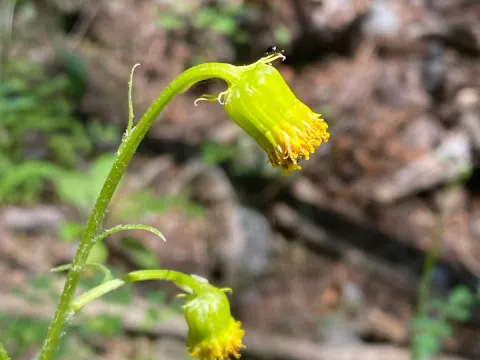
Bigelow's groundsel
Senecio bigelovii
Bigelow's groundsel (Senecio bigelovii) is a perennial herbaceous plant belonging to the Asteraceae family. Native to the mountainous regions of North America, it is well-adapted to high-altitude environments, which defines its inherent resilience and structural strength.
What the section contains
Bigelow's groundsel
The plant is characterized by sturdy, erect stems and vibrant yellow flower heads arranged in clusters. Its foliage typically consists of lance-shaped, alternate leaves that form a base rosette, providing a distinct appearance that is highly valued in naturalistic planting schemes.
Soil requirements for optimal growth include well-drained, nutrient-rich substrates with a neutral to slightly acidic pH level. The plant is intolerant of waterlogged conditions, making proper soil preparation with drainage gravel essential for long-term survival in garden settings.
Regarding climate, Bigelow's groundsel thrives in temperate conditions with exposure to full sun or partial shade. Its physiological adaptation to alpine climates ensures it can withstand significant diurnal temperature variations and cold winter dormancy effectively.
The primary agricultural and horticultural use of this species is in landscape design and soil stabilization projects. Due to its robust root system, it is frequently utilized in ecological restoration, such as stabilizing sloped terrain and creating sustainable native plant habitats.
Fungal diseases such as powdery mildew represent a significant threat to the health of Bigelow's groundsel, particularly in areas with high humidity and poor air circulation. Implementing adequate spacing between plants is a crucial preventive cultural practice.
Common pests include aphids and spider mites, which target the tender parts of the plant during the active growing season. Integrated pest management strategies, emphasizing the use of natural predators, are recommended to maintain plant health without harming beneficial local fauna.
Root rot remains the most common issue associated with improper irrigation practices. Overwatering creates anaerobic soil conditions that lead to pathogen proliferation; therefore, monitoring soil moisture levels is vital for maintaining a healthy and vigorous perennial display.
Weeds significantly compete with the plant for nutrients and sunlight during the establishment phase. Using mulch, such as wood chips or gravel, helps maintain soil moisture while effectively suppressing the germination and growth of invasive weed species around the root zone.
Winter damage from small mammals can occasionally affect the crowns of the plants. Providing protection with wire mesh or repellents during late autumn can prevent unnecessary damage, ensuring the plant emerges successfully when the growing season begins the following spring.