
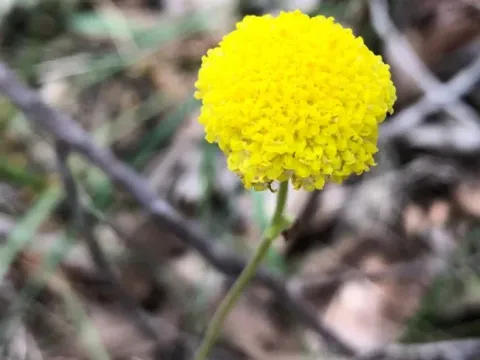
Billy Buttons
Craspedia glauca
Craspedia glauca, commonly known as Billy Buttons or Drumstick, is a perennial herbaceous plant from the Asteraceae family, often cultivated as an annual in temperate regions. The primary propagation method involves starting seeds in trays, which ensures a uniform and healthy crop during the first season.
What the section contains
Billy Buttons
Seeds should be sown indoors in late February or early March using a light, well-draining seed-starting mix. The seeds require light for germination, so they should be sown on the surface and barely covered with vermiculite or sand. Keep the containers covered with plastic and maintain a temperature of 20–22 degrees Celsius.
Seedlings typically emerge within 14–20 days. Once the first true leaves appear, transplant the seedlings into individual cells to encourage robust root development. It is crucial to harden off the plants before transferring them outdoors to ensure they adapt well to environmental shifts.
The final planting in open soil should only occur after all risks of frost have passed. In most regions, this timing falls in late May, when the soil has warmed sufficiently for active growth.
For professional cut flower production, a planting density of 20–25 plants per square meter is recommended to facilitate optimal airflow and simplify maintenance tasks like weeding and harvesting.
Craspedia is a sun-loving and drought-tolerant crop that thrives in open, sunny locations. Lack of adequate sunlight results in poor-quality flower heads and diminished color intensity, making the selection of an open site essential for commercial success.
The crop requires light, well-draining soil with a neutral to slightly acidic pH. Heavy clay soils that retain moisture are unsuitable and can lead to root rot, so incorporating organic matter or coarse sand may be necessary to improve drainage.
Watering should be balanced. While the plant can withstand short periods of dryness, consistent soil moisture is required during the active vegetative stage to ensure the formation of uniform, high-quality flower heads.
Fertilization should be managed carefully. Apply a balanced mineral fertilizer at planting time, but avoid excessive nitrogen during the growth phase, as this promotes leaf development at the expense of floral production.
The plant is heat-tolerant but susceptible to high humidity. Good site ventilation is vital to prevent fungal diseases, especially in regions with frequent rain or morning fog.
Yield for Craspedia is measured by the number of high-quality marketable stems per unit area. Under optimal conditions, a single healthy plant can produce between 5 and 10 sturdy flower heads suitable for commercial floristry.
Maximum productivity is achieved through precise spacing and consistent nutrient management. Mulching can help maintain stable soil moisture levels, which directly contributes to the consistency and length of the stems.
Harvesting requires professional judgment, as the timing of the cut dictates the final appearance of the dried flower. The stems should be cut when the spherical flower heads are fully formed and firm to the touch.
When properly handled and dried, Craspedia retains its vibrant yellow color and structural integrity for months, making it a high-value commodity in the dried flower market.
Yield is heavily dependent on seasonal weather. Excessive rain during the flowering stage can impact the quality of the stems, leading growers in humid climates to utilize protective tunnel covers or greenhouses.
Craspedia is generally resilient to many pests and diseases, but poor cultural practices can lead to fungal infections. Issues most frequently arise from waterlogged soil or lack of airflow in dense plantings.
Root rot is the most significant threat, typically triggered by overwatering or inadequate soil drainage. Maintaining proper soil structure and allowing the top layer to dry between waterings is the best preventive strategy.
Aphids and spider mites may occasionally infest the plants, particularly during dry, hot weather. Regular scouting of the foliage is necessary to detect infestations early and allow for targeted control measures.
Use biological controls or systemic insecticides if necessary, ensuring that all harvesting safety intervals are strictly followed to maintain the quality and safety of the floral materials.
Weed control is also important, as weeds act as hosts for viruses and insects that can weaken the crop. Keeping the site clean improves the overall vigor of the Craspedia plants.
Harvesting occurs when the flower heads are fully open, dense, and possess a vibrant yellow color. Harvesting too early can result in the heads losing their spherical shape and shrinking during the drying process.
Cut the stems early in the morning after the dew has evaporated but before the heat of the day. This timing ensures the highest water content within the stems, which helps prevent wilting before the drying process begins.
Tie the stems in small bunches and hang them upside down in a dark, well-ventilated, and dry area. Keep them out of direct sunlight, as UV rays will cause the yellow pigment to fade prematurely.
The drying process typically takes one to two weeks, depending on ambient humidity and ventilation. Ensure that the stems are fully dehydrated, as residual moisture can cause molding during long-term storage.
Once dried, store the stems in a cool, dry place inside cardboard boxes or paper sleeves to protect them from mechanical damage and hygroscopic moisture absorption.