
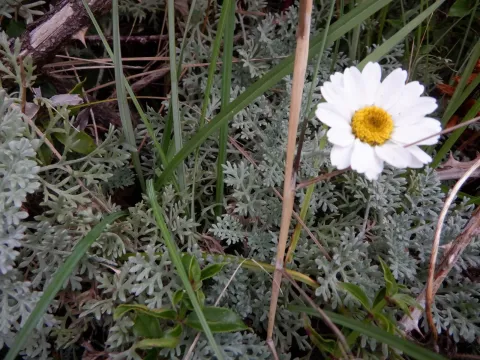
Anthemis cupaniana
Anthemis cupaniana
Anthemis cupaniana is a herbaceous perennial belonging to the Asteraceae family. Known for its distinct silvery-grey, finely divided foliage, it forms low-growing, spreading mats that serve as an excellent ground cover in suitable climates.
What the section contains
Anthemis cupaniana
Native to the Mediterranean region, specifically Sicily, this plant is naturally adapted to rugged, rocky landscapes. It has become a popular agricultural and ornamental choice for dry, well-draining garden beds where other plants might struggle to survive.
Cultivation requirements focus on full sun exposure, which is essential to maintain the intense silver color of the leaves and ensure profuse flowering. Plants placed in shade tend to lose their compactness and exhibit sparse growth patterns.
The soil must be well-drained and alkaline to neutral in pH. Anthemis cupaniana thrives in poor, sandy, or gravelly soils, making it highly suitable for xeriscaping and rock gardens. Heavy, wet soils must be avoided to prevent plant death.
Maintenance is minimal once the plant is established. Annual pruning after the initial bloom encourages fresh growth and a second wave of flowers later in the season. Over-fertilization should be avoided, as it encourages weak, sprawling stems.
The most significant threat to the plant's health is high humidity combined with poor drainage, which often leads to root rot. If the roots remain wet for extended periods, the plant will quickly succumb to fungal pathogens.
Powdery mildew is a common foliage disease, especially during periods of high humidity and limited airflow. Providing sufficient space between plants during planting helps reduce the humidity around the leaves, mitigating this risk.
Aphids can cause damage to the soft, emerging growth in the spring. While rarely fatal, severe infestations can stunt the plant's development and reduce its overall visual appeal throughout the summer months.
Slugs and snails may attack the young leaves, particularly in damp springs or coastal gardens. Using inorganic mulches like grit or crushed stone around the base of the plant can serve as an effective physical barrier.
Management of these threats is largely preventative. By choosing a location with excellent airflow, gritty soil, and full sun, the gardener can minimize the need for chemical interventions and maintain a healthy, vibrant plant population.