
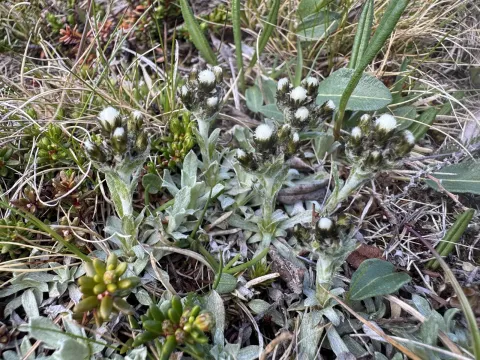
Alpine everlasting
Antennaria alpina
Antennaria alpina is typically propagated through seeds or by division of mature clumps in spring or autumn. Seeds are small and require minimal covering when sown in seed trays.
What the section contains
Alpine everlasting
For successful germination, the seeds benefit from a period of cold stratification before sowing. This process mimics the plant's natural environment and significantly improves seedling uniformity.
Sowing in a well-draining, sandy compost mix is essential. Maintain a temperature of approximately 18-20 degrees Celsius, ensuring the soil remains moist but never waterlogged.
Once the seedlings develop two sets of true leaves, they should be pricked out into small individual pots to establish a strong root system before being moved to their final location.
Planting out into the garden should happen after the risk of frost has passed, ensuring plants are spaced about 15-20 cm apart to allow for proper expansion of the mat-forming foliage.
Belonging to the Asteraceae family, Alpine everlasting is a resilient plant native to arctic and alpine regions. It thrives in open, sunny locations with direct sun exposure throughout the day.
The soil must be poor, gritty, and exceptionally well-draining. The plant is perfectly adapted to rocky or sandy soils and struggles if the substrate is too rich or prone to water retention.
Water requirements are very low. Established plants are drought-tolerant and should only be watered during prolonged dry spells to prevent excessive leaf yellowing or decay.
Hardiness is one of the key features of this species, as it is evolved to survive in extreme alpine conditions. It requires no special protection during harsh winter months.
Regular grooming is limited to the removal of spent flower stalks after blooming. This practice maintains the aesthetic appeal of the silver-leaved foliage mats.
The primary threat to Antennaria alpina is root rot, which is almost exclusively caused by overwatering or poor drainage. Ensuring the crown of the plant is kept dry with grit is essential.
While the plant is generally pest-resistant, aphids can occasionally infest new growth during the spring. Monitoring and, if necessary, using mild soaps can control these populations.
Weed encroachment is a major issue because the plant grows slowly. It cannot compete with vigorous weeds, so the area around the mats must be kept clear of invasive vegetation.
Fungal issues, such as leaf spot, may occur in conditions of low airflow and high humidity. Providing adequate space between plants and avoiding overhead watering helps mitigate this risk.
Successful cultivation requires minimal intervention, focusing mainly on preventing soil compaction and maintaining the specific drainage conditions favored by this alpine species.