
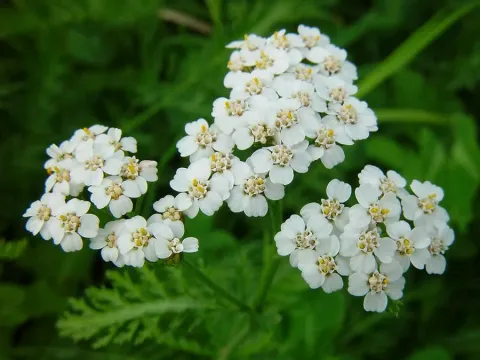
Meadow yarrow
Achillea pratensis
Sowing of meadow yarrow (Achillea pratensis) is typically performed in early spring as soon as the soil warms to 10–12°C, or in late October for winter dormancy. Since the seeds are minute, they are sown at a shallow depth of no more than 0.5–1 cm to ensure uniform germination.
What the section contains
Meadow yarrow
For spring seeding, the soil must be thoroughly loosened and compacted after sowing to improve contact with the moist substrate. The crop is undemanding but requires a field clear of weeds during the early growth stages, as seedlings develop slowly.
The planting pattern depends on the production goal: industrial-scale harvesting uses a row cropping method with 45–60 cm between rows. This spacing ensures adequate nutrient access and allows for mechanized field maintenance.
The seeding rate is approximately 2–3 kg per hectare for row crops. Maintaining uniform seed distribution is critical, as overcrowded stands are highly susceptible to fungal diseases.
During the first year, the crop forms a basal rosette of leaves and develops a strong root system, meaning full bloom and peak productivity typically occur in the second year of vegetation.
Meadow yarrow belongs to the Asteraceae family and is known for its high ecological plasticity. The plant thrives in both open, sunny areas and conditions with light shade.
It prefers moderately moist, loose, and humus-rich soils with a neutral or slightly alkaline pH. However, it can withstand periodic drought thanks to its deep taproot system.
Climatic conditions are crucial: the plant is cold-hardy and easily survives harsh winters in temperate regions. Waterlogging and stagnant water in heavy clay soils are detrimental to the root system.
Agronomic practices require timely cultivation of inter-row spaces and weeding during the first months of growth. Mineral fertilizers, especially nitrogen, stimulate green mass growth, but excessive nitrogen can reduce essential oil concentrations.
The plant is an excellent honey producer and is often included in forage mixtures for pastures, as it offers high nutritional value and therapeutic benefits for livestock.
The yield of meadow yarrow biomass under proper management averages 10–15 centners of dried herb per hectare. Productivity varies significantly depending on the stage of harvest.
The highest concentration of biologically active compounds, such as flavonoids and essential oils, is reached during full bloom. Harvesting at this stage ensures the highest quality of marketable produce.
Starting from the second year, the crop allows for one or two harvests per season. After the initial cutting, the plant regrows rapidly, allowing for additional biomass collection by late summer.
Regular fertilization following harvest helps the plant recover and promotes floral bud formation for the following year. Appropriate crop rotation extends the productive lifespan of the plantation to 5–7 years.
Product quality depends on drying conditions: harvested material must be dried quickly in shade or in specialized dryers at temperatures not exceeding 40°C to preserve medicinal properties.
Meadow yarrow possesses strong natural immunity, yet poor management can lead to powdery mildew outbreaks, especially during summers with excessive rainfall.
Pests such as leafrollers and aphids can damage young plants by feeding on leaves and hindering rosette development. Management involves the use of biological insecticides.
Rust is another common disease occurring in conditions of high humidity and poor stand aeration. Prevention includes maintaining adequate spatial isolation and timely thinning of the plants.
Weeds are the primary competitors for yarrow, particularly couch grass and thistle. Their mass appearance requires regular mechanical inter-row cultivation or the use of selective herbicides.
To prevent disease spread, it is essential to avoid soil over-saturation and ensure good air circulation, which significantly lowers the risk of pathogen outbreaks.
Harvesting is conducted during the full flowering stage, when the corymbose inflorescences are maximally open. This represents the peak of essential oil and active compound concentration.
Mowers are used to harvest at a cutting height of 10–15 cm from the soil surface. The upper parts of the flowering shoots, up to 20 cm in length, are cut along with the leaves.
Harvested material should be free from thick, woody stem parts; therefore, machinery must be calibrated for the correct height to minimize ballast content.
Immediately after harvest, the product is transported to processing facilities. Delays during transport can cause the material to heat up internally, negatively affecting chemical composition and market appeal.
In industrial processing, drying is performed in chambers with strict temperature control, ensuring the production of high-quality extracts or pharmaceutical-grade dried herbs.