
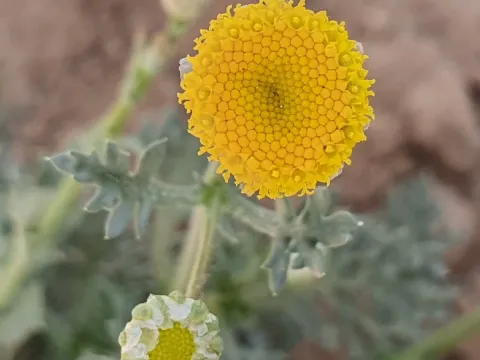
Aaronsohnia
Aaronsohnia
Aaronsohnia is a genus of annual herbaceous plants belonging to the Asteraceae family. It is increasingly recognized in agricultural research as a resilient crop suitable for arid and semi-arid environments where conventional agricultural practices face significant water limitations.
What the section contains


Aaronsohnia
The sowing process is typically scheduled to align with the arrival of the rainy season in desert or semi-desert regions. Seeds require optimal soil contact and stable moderate temperatures to ensure uniform germination, which is a prerequisite for a productive season.
Seed depth management is critical, as the small size of the seeds necessitates shallow planting, usually at a depth of no more than 1 to 2 centimeters. Proper calibration of sowing equipment ensures an even distribution and prevents seeds from becoming buried too deeply.
Row spacing is generally maintained at 30 to 45 centimeters to provide each individual plant with sufficient space to develop its root system and canopy. This spacing also facilitates better airflow, which is essential for reducing humidity-related diseases in dense plantings.
Once established, the crop demonstrates vigorous growth, competing effectively with opportunistic desert vegetation. This growth pattern allows for minimized intervention in weed control, making it an excellent choice for low-input agricultural systems.
The primary requirement for Aaronsohnia is well-drained, sandy or loamy soil. It is extremely intolerant of waterlogged conditions, which can lead to rapid root rot and crop failure, making selection of appropriate site topography essential.
Regarding climate, this plant thrives in regions with intense solar radiation and high temperatures. It is highly adapted to arid conditions, utilizing physiological mechanisms that allow it to remain productive even during periods of extreme thermal stress.
Soil pH adaptability is a notable feature, with the plant performing well in neutral to slightly alkaline conditions. Its high tolerance to salinity makes it an ideal candidate for reclaiming degraded soils that are otherwise unsuitable for traditional agriculture.
The plant requires full sun exposure throughout its vegetative phase. Any significant obstruction or shading can negatively impact the development of the flower heads, which are the main organ where valuable phytochemicals are accumulated.
Minimal fertilization is usually sufficient, as the plant is evolved to extract nutrients from resource-poor desert soils. However, modest nitrogen applications at the early vegetative stage can boost biomass production without requiring intensive management.
Despite its robustness, Aaronsohnia can be susceptible to specific pests, particularly aphids and certain types of desert beetles that thrive in the same habitat. Early monitoring is necessary to prevent significant damage during the sensitive flowering stage.
Fungal pathogens associated with high humidity or poor soil drainage represent the most significant disease threats. Root and crown rot are common if the soil moisture levels are not carefully monitored during the rainy intervals.
Root-knot nematodes can occasionally pose a risk in certain sandy soils, affecting the plant's ability to uptake water and nutrients. Crop rotation schemes should be implemented to mitigate the buildup of such soil-borne pathogens in the field.
Viral infections transmitted by insect vectors can occur in areas where the plant is grown in close proximity to other host species. Maintaining healthy field boundaries and controlling insect populations are essential components of an integrated pest management strategy.
Invasive weed species can outcompete seedlings during the early stages of development. Regular manual or mechanical weeding in the first weeks post-germination is often required to ensure that the crop achieves dominance over the field area.
Harvesting should be timed precisely at the peak of full flowering. This period is when the concentration of secondary metabolites, including essential oils, is at its highest, providing the best quality for commercial extraction.
Mechanical harvesting equipment should be adjusted to minimize impact to the delicate flower heads. Excessive vibration or aggressive threshing mechanisms can shatter the blooms and result in significant loss of volatile components before they reach the processing facility.
Post-harvest processing involves rapid drying in a temperature-controlled, well-ventilated environment. Avoiding direct contact with sunlight is crucial to prevent the degradation of heat-sensitive compounds and preserve the plant's aromatic profile.
Proper storage is essential to maintain the shelf life of the harvested material. Using airtight, opaque containers protects the product from oxidation, moisture absorption, and ultraviolet degradation, which are the primary causes of quality loss.
The remaining plant material can be harvested for secondary uses, such as biomass or soil amendment. Returning the plant waste to the soil helps maintain carbon levels and improves the structural integrity of desert soils for future growing seasons.