
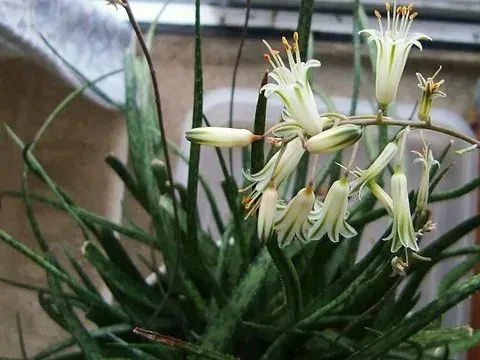
Aloe albiflora
Aloe albiflora
Aloe albiflora, commonly known as the white-flowered aloe, is a rare dwarf succulent species belonging to the Asphodelaceae family. It is native to the island of Madagascar, where it typically inhabits rocky and sandy environments.
What the section contains
Aloe albiflora
The plant grows as a compact rosette of narrow, fleshy leaves that are dark green and adorned with distinct white spots. Its most striking botanical feature is its dainty white flowers, which are relatively uncommon in the broader genus of aloes.
For optimal growth, Aloe albiflora requires bright, filtered light. While it thrives in sunshine, it should be protected from harsh midday rays that can cause leaf scorching, particularly in indoor environments.
The soil substrate must be highly porous and well-draining. A mixture of horticultural sand, perlite, and a small portion of loam is recommended to ensure that excess water drains quickly, preventing root asphyxiation.
Temperature management is critical for this species. It prefers a range between 20°C and 25°C during the growing season. In winter, the plant enters a dormant phase where temperatures should be kept slightly cooler, between 12°C and 15°C, with significantly reduced watering.
Overwatering is the primary threat to the health of Aloe albiflora. Excessive moisture in the substrate leads directly to root rot, which is often fatal if not detected and addressed by repotting into drier soil.
Mealybugs are the most persistent pests affecting this species. They hide in the tight spaces between the succulent leaves, making them difficult to detect until they form visible white, cotton-like masses on the plant.
Spider mites may also pose a problem in environments with low humidity and stagnant air. These pests cause discoloration and weaken the plant's overall vigor by feeding on the cellular sap of the leaves.
Fungal infections can occur if water sits within the leaf rosette for extended periods. To mitigate this risk, it is advised to water the soil directly rather than wetting the entire plant foliage.
Effective management involves consistent monitoring and the use of insecticidal soaps or neem oil when infestations are identified. Maintaining proper air circulation is the best preventive measure against both fungal growth and common succulent pests.