
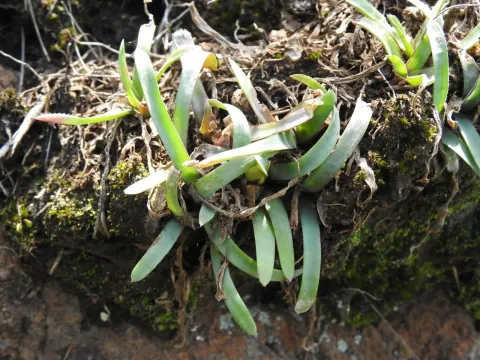
Aloe albida
Aloe albida
Aloe albida is a distinctive dwarf succulent species belonging to the Asphodelaceae family, noted for its compact growth habit and grass-like leaf appearance.
What the section contains
Aloe albida
Originating from the Mpumalanga region of South Africa, it is native to high-altitude grassland habitats where it thrives in well-drained, nutrient-poor soils.
The botanical structure consists of a basal rosette of narrow, slightly recurved leaves, often displaying a pale or whitish coloration, which makes it a prized specimen for collectors.
In cultivation, this species requires a gritty, mineral-based potting substrate with excellent drainage properties to prevent the root system from suffocating.
Environmental conditions should mimic its natural habitat, requiring high levels of light intensity to maintain the plant's characteristic structure and prevent etiolation.
The most common biological threat to Aloe albida is root rot, which occurs rapidly if the plant is subjected to stagnant water or excessive humidity during dormancy.
Pests such as mealybugs represent a significant risk, as they often hide between the tight leaf bases, making them difficult to detect and eradicate.
Fungal infections, often manifested as dark spots on the leaf surface, are typically a secondary result of poor ventilation and excessive moisture on the foliage.
To maintain plant health, it is essential to implement a rigorous monitoring program, especially during the transition between seasonal growth phases.
Physical removal of pests followed by targeted application of appropriate horticultural treatments remains the most effective management strategy for this delicate species.