
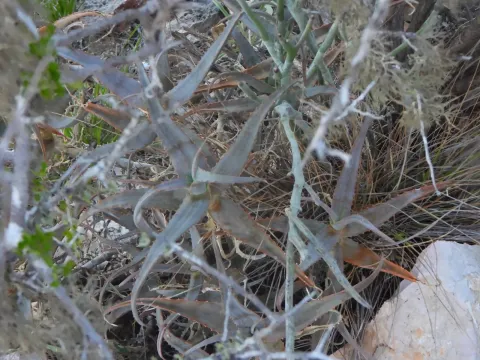
Aloe acutissima
Aloe acutissima
Aloe acutissima is a species of succulent plant belonging to the Asphodelaceae family. Native to the rocky terrains of Madagascar, this plant has evolved to thrive in arid environments with minimal precipitation.
What the section contains
Aloe acutissima
The plant exhibits a characteristic habit of forming rosettes of sharp, pointed leaves that are often stiff and textured. It is a perennial species that can grow in clusters, making it an attractive subject for botanical collections.
Optimal cultivation requires a well-draining, porous soil mix, typically composed of grit, sand, and organic components. Drainage is the most important factor in preventing root issues and ensuring longevity.
This species demands high light intensity to maintain its compact growth form. During the growing season, it should be placed in a position where it receives several hours of direct morning or late afternoon sunlight.
In addition to its horticultural value, Aloe acutissima serves as a genetic resource for studying the adaptation strategies of succulents. It is widely prized by collectors for its unique morphological features and resilience.
Root rot is the most significant threat to the health of the plant, almost exclusively caused by overwatering or poor drainage. It is essential to allow the soil to dry completely between watering sessions.
Mealybugs are the most common pest associated with this species. They hide in the tight spaces between leaves, making them difficult to detect until the infestation becomes significant.
Scale insects can also attach themselves to the leaves, draining vital nutrients and causing chlorosis or physical damage to the epidermis of the plant.
Fungal pathogens can occasionally affect the roots or leaf bases if the humidity levels remain consistently high without adequate air circulation.
Maintaining a dry environment and ensuring good air movement are the primary preventative measures against most biological threats that affect this type of succulent.