
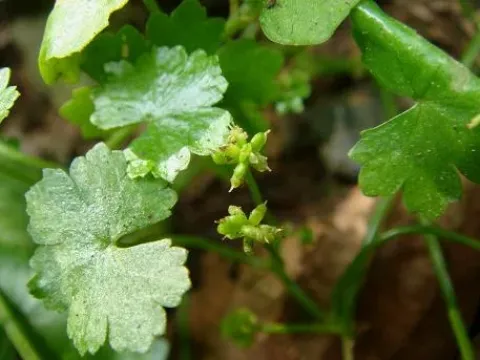
Yabe's pennywort
Hydrocotyle yabei
Sowing or propagation of Hydrocotyle yabei is best performed in early spring when water and soil temperatures stabilize above 15°C.
What the section contains
Yabe's pennywort
The preferred method of propagation is vegetative division, where stems with nodes are cut and placed into a nutrient-rich substrate.
When planting, ensure that each cutting has at least two healthy nodes to facilitate rapid root development and establishment.
Space the plantings at intervals of approximately 10–15 centimeters to allow for lateral expansion and sufficient airflow.
For indoor setups, year-round planting is feasible provided that controlled light and thermal conditions are strictly maintained.
Belonging to the Araliaceae family, this plant thrives in aquatic or semi-aquatic environments with high moisture levels.
Optimal growth requires bright, filtered sunlight, as intense direct midday sun can often lead to leaf scorch and dehydration.
The substrate should be rich in organic matter, slightly acidic, and maintained in a permanently moist state for healthy root function.
Temperature management is critical; the plant performs best in moderate climates and should be protected from harsh freezing conditions.
Water quality must be monitored to ensure it remains free from excessive salt accumulation, which can inhibit nutrient absorption.
The yield of green biomass is determined by the frequency of trimming and the availability of essential macro and micronutrients.
Through systematic fertilization and pruning, cultivators can achieve multiple harvest cycles throughout the primary growing season.
High-density hydroponic systems significantly increase the volume of harvestable material compared to traditional soil-based methods.
Regular monitoring of leaf development allows for targeted nutrient application, which maximizes the growth rate of the canopy.
- Optimized nitrogen supply.
- Consistent water quality monitoring.
- Regular removal of old foliage.
Root rot and fungal infections represent the most significant threats, usually resulting from stagnant water and poor drainage systems.
Pests such as aphids and spider mites are common in environments with low humidity or where the plants are overcrowded.
Leaf-eating insects can cause aesthetic and physical damage, necessitating the use of biological control agents to preserve crop health.
Proactive management includes ensuring adequate circulation of water and air to minimize the survival rate of plant pathogens.
Early detection through frequent field inspections is the most effective way to prevent localized issues from becoming widespread outbreaks.
Harvesting is performed by carefully pruning the stems above the growth nodes to encourage rejuvenation and future vegetative growth.
Freshly harvested material must be kept in cool, shaded conditions to prevent rapid transpiration and loss of freshness.
Sorting and cleaning should take place immediately after harvest to maintain the quality standards required for commercial distribution.
It is vital to leave a portion of the root system and healthy shoots to ensure the plant continues to thrive after the harvest operation.
Efficient timing of the harvest avoids the onset of cold autumn weather, which can negatively impact the recovery of the plants.