
Syngonium auritum
Syngonium auritum
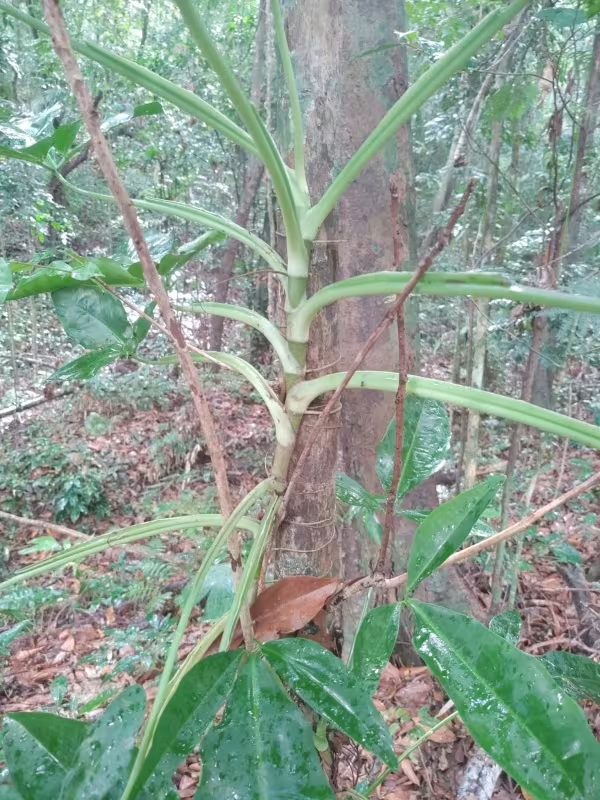
Description
Growing requirements
Syngonium auritum, often referred to as the Five Finger Plant, belongs to the Araceae family. This evergreen climber is native to the tropical forests of Central and South America, where it typically grows as an epiphyte, scaling trees to reach sunlight.
For optimal growth, this plant requires bright, indirect light. Direct sunlight is harmful and can cause leaf scorch, while extremely low light conditions often lead to sparse foliage and a loss of the plant's distinctive, ornate leaf shape.
The plant thrives in temperatures between 20°C and 25°C. As a tropical species, it demands high ambient humidity; thus, regular misting or the use of a humidifier is highly recommended to maintain the health of its delicate leaves.
The soil requirements focus on excellent drainage and aeration. A substrate based on peat moss, pine bark, and perlite provides the ideal balance, allowing oxygen to reach the roots while holding sufficient moisture to keep the plant hydrated.
Watering should be carried out consistently, allowing the top inch of the soil to dry out between applications. During the winter, growth naturally slows down, necessitating a reduction in watering frequency to prevent root rot in the cold, damp substrate.
Yield
Syngonium auritum is primarily cultivated as an ornamental plant for interior design and phytodesign. It is valued for its unique foliage, which matures into a three-to-five-lobed shape, giving it a distinct aesthetic appeal.
Due to its rapid growth rate, it is widely used in commercial greenhouses for the production of trailing vines and vertical garden wall elements. The plant is effective at purifying indoor air by filtering various common household pollutants.
Propagation is most efficiently achieved through stem cuttings. Each cutting should include at least one node and a portion of a petiole; these are then placed in water or a high-porosity medium to stimulate the development of an adventitious root system.
Regular fertilization with a balanced liquid fertilizer during the growing season is essential for maintaining deep green foliage. It supports the plant's structural integrity and encourages the development of new, healthy shoots.
Pruning is an integral part of crop management for this species. By trimming back long, leggy stems, growers can manipulate the plant's shape, encouraging a fuller, more compact growth habit that is highly sought after in the retail market.
Main diseases and pests
The most common pests affecting Syngonium auritum are spider mites and scale insects. These organisms thrive in dry, stagnant air and can severely damage the plant by feeding on cell sap, leading to yellowing and premature leaf drop.
Mealybugs are frequently encountered in leaf axils, appearing as white, cotton-like masses. Infestations should be managed immediately with systematic insecticides or by manual removal with cotton swabs dipped in alcohol to prevent spread.
Root rot is the most common physiological disorder, usually resulting from overwatering or inadequate soil drainage. If the soil remains saturated for extended periods, the roots will suffer from hypoxia, eventually leading to plant collapse.
Fungal leaf spot diseases may occur if the foliage remains wet or if there is poor air circulation in the growing environment. Keeping the foliage dry during evening hours and ensuring good airflow is a vital preventative measure.
General plant health is best maintained through consistent monitoring and good hygiene. By removing dead tissue and keeping the growing area clean, growers can prevent the establishment of many common pathogens that affect tropical aroids.