
Syngonium erythrophyllum
Syngonium erythrophyllum
Description
Growing requirements
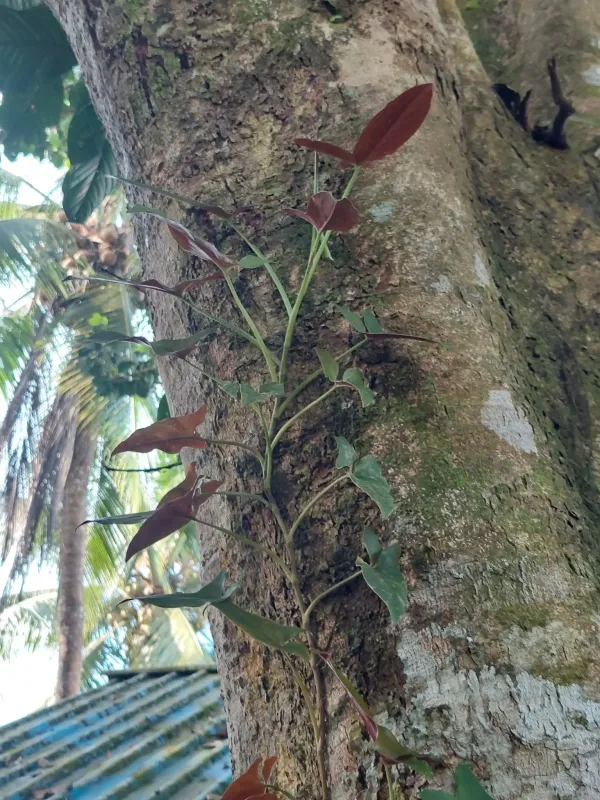
Syngonium erythrophyllum is a distinctive member of the Araceae family, native to the tropical rainforests of Panama. It is highly valued for its striking foliage, which features deep green or dark purple-toned leaves with a characteristic reddish-maroon underside, providing a strong aesthetic contrast.
As a tropical epiphyte, this plant requires high environmental humidity, ideally maintained above 60%. Implementing misting routines or using mechanical humidifiers is essential to prevent leaf edges from browning and to support healthy foliage development.
The substrate must be well-draining, mimicking the forest floor composition. A mixture of orchid bark, peat moss, perlite, and charcoal is recommended to ensure that the root system has access to both adequate moisture and sufficient oxygen exchange.
Regarding light, the species thrives in bright, indirect light conditions. While it can tolerate lower light levels, the intensity of its deep pigmentation and overall growth rate will be significantly reduced if placed in deep shade.
Water management is critical: the soil should be allowed to dry slightly at the surface before the next irrigation cycle. Excess water should never be allowed to accumulate in the drainage tray, as this inevitably leads to root asphyxiation and subsequent decay.
Main diseases and pests
The primary pest threats to this plant are spider mites, scale insects, and mealybugs, which are particularly prevalent when the plant is stressed by low atmospheric humidity or poor ventilation.
Root and stem rot caused by pathogenic fungi, such as Fusarium or Rhizoctonia, are common physiological consequences of poor agricultural practice, specifically over-irrigation in poorly drained potting mixes.
Integrated pest management should involve physical removal of visible insects, supplemented by the application of horticultural oils or systemic insecticides if infestations become widespread.
Preventative hygiene, including the sterilization of tools and the use of fresh, pathogen-free growing media during repotting, is the most effective defense against soil-borne infections.
Regular monitoring of the underside of leaves is recommended, as this is where pests typically colonize and start feeding, often going unnoticed until significant damage to the epidermis has occurred.