
Syngonium hybrids
Syngonium hybrids
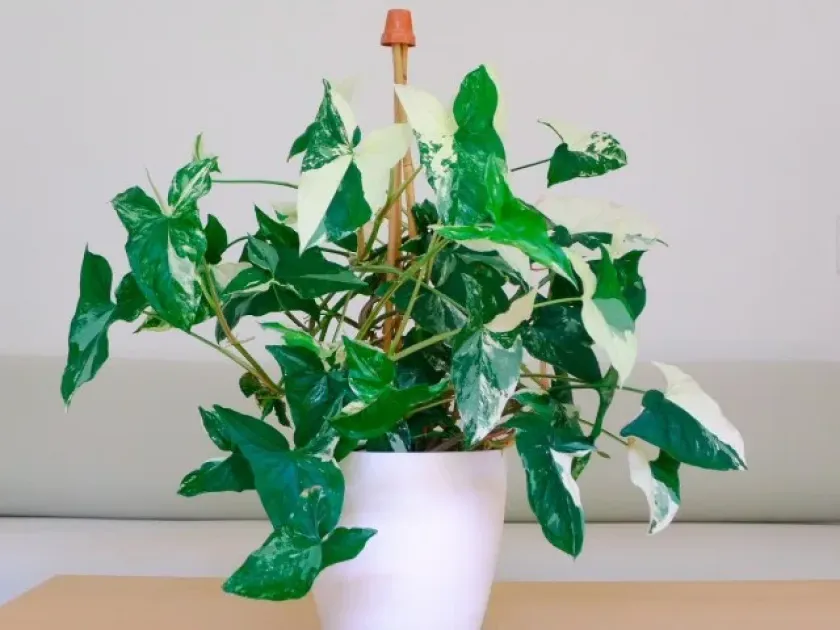
Description
Growing requirements
Syngonium hybrids (Syngonium hybrids) belong to the Araceae family, encompassing a diverse group of ornamental cultivars derived from tropical species native to the Americas. These plants are widely valued for their rapid growth rate and foliage aesthetics.
Botanically, they are characterized by their ability to transition from juvenile juvenile stages with simple leaves to mature stages with deeply lobed, compound foliage. Their stems exhibit node development that facilitates climbing via aerial roots.
Optimal growth requires high humidity and bright, indirect light. Exposure to direct sunlight often results in scorched leaves, while insufficient light leads to stem elongation and loss of typical variegation patterns in hybrid cultivars.
The substrate must prioritize drainage and aeration. A standard professional mix often includes peat, pine bark, and perlite in ratios that maintain moisture without creating waterlogged conditions, which are detrimental to the root system.
These plants are primary candidates for interior landscaping, particularly in vertical green walls and hanging containers. Their economic importance is significant within the indoor ornamental plant industry due to their hardiness and propagation ease.
Main diseases and pests
Common pests include spider mites, mealybugs, and scale insects that thrive in low-humidity environments. Integrated pest management strategies, such as physical removal and horticultural oils, are effective for maintaining plant health.
Pathogenic threats are dominated by root rots, typically caused by Phytophthora or Pythium species during periods of poor drainage. Adhering to strict irrigation cycles and using sterilized growing media effectively mitigates these risks.