
Pinellia
Pinellia hybrids
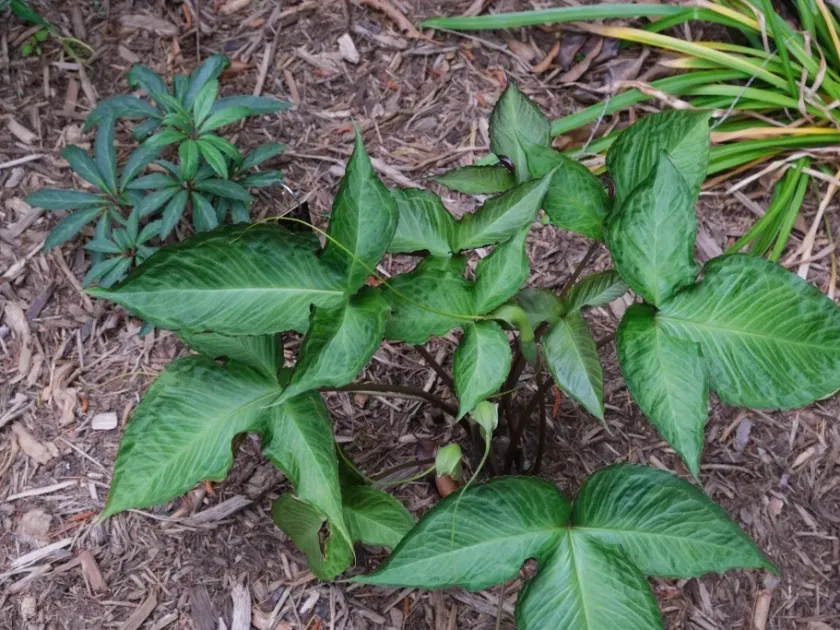
Description
Sowing dates
Pinellia (Pinellia ternata) is primarily propagated through vegetative methods, specifically using daughter tubers or divisions of the main tuber. The ideal planting time is early spring, once the soil temperature consistently stays above 10-12 degrees Celsius.
Tubers are planted at a depth of 5 to 8 centimeters, depending on their size. It is essential to maintain a spacing of 20-30 centimeters between rows to ensure proper air circulation and allow for effective mechanical maintenance throughout the growing season.
To enhance germination rates, some growers prefer to pre-treat tubers with growth stimulants. Proper spacing prevents overcrowding, which is a major factor in minimizing competition for light and soil nutrients.
While seed propagation is technically possible, it is rarely used in commercial farming due to the long developmental cycle. Using tubers ensures a more uniform crop and a significantly shorter time until harvest.
As a member of the Araceae family, Pinellia thrives in shaded or semi-shaded environments. Direct, intense sunlight can lead to leaf scorch and soil overheating, which negatively impacts the overall health and vigor of the plants.
Growing requirements
Pinellia requires light, well-draining, and nutrient-rich soil. A sandy loam or silty soil with a near-neutral pH is optimal. The soil must be loose enough to allow the tubers to expand without restricted growth.
Consistent soil moisture is vital for the development of Pinellia. However, the crop is highly sensitive to waterlogging, which quickly leads to tuber rot. A reliable drainage system is mandatory for any commercial plantation.
Regular weeding is critical, especially during the early stages of growth, as Pinellia is a poor competitor against aggressive weeds. Mulching with organic matter is recommended to suppress weeds and maintain stable soil moisture levels.
Fertilization should prioritize potassium and phosphorus to support tuber development. Excessive nitrogen fertilization should be avoided, as it encourages excessive foliage growth at the expense of the tuber’s bioactive concentration.
The climate should mirror its natural habitat in East Asia, characterized by mild, humid conditions. In regions with harsh seasonal shifts, appropriate protective measures or high-quality mulching are necessary to protect the underground parts from extreme temperatures.
Yield
The yield of Pinellia is heavily dependent on the management practices applied during the active growth phase. By autumn, the plant completes its cycle and accumulates the maximum amount of pharmacological compounds in its tubers.
Yields are typically measured by the mass of harvested tubers per hectare. High-quality yield is defined by the size, firmness, and uniformity of the tubers, which directly dictates their market value for the pharmaceutical industry.
Management of the irrigation and nutrient supply directly affects the final yield. Monitoring the plant’s health allows for adjustments that can prevent stunting and improve the overall biomass of the tubers by the end of the season.
Post-harvest efficiency is also part of the yield equation. Proper sorting and calibration of the tubers ensure that losses due to storage issues are minimized, maximizing the total volume of marketable final product.
Continuous monitoring of the plantation throughout the season is essential. Early identification of issues allows for timely interventions, ensuring the highest possible yield of high-quality medicinal material.
Main diseases and pests
Fungal infections, particularly various types of tuber rot, represent the most significant threat to Pinellia, especially in high-humidity environments. Improving ventilation and drainage is the primary defense strategy.
Soil-dwelling pests like wireworms can cause severe damage to the tubers. A rigorous crop rotation strategy, where Pinellia is not planted on the same land for at least three to four years, is the best way to prevent pest buildup.
Viral infections, often spread by insect vectors, can cause leaf deformation and reduced yields. Infected plants must be identified and rogueed out immediately to prevent the spread of the virus across the plantation.
Integrated Pest Management (IPM) should be applied to minimize the use of chemical pesticides. Promoting beneficial insects and using biologically-based soil treatments can help create a resilient environment.
Proper hygiene during the planting and harvesting process is essential to avoid introducing pathogens. All tools should be sanitized regularly, and diseased plant material must be removed and destroyed away from the field.
Harvesting
Harvesting takes place once the foliage turns yellow and withers, indicating that the plant has entered dormancy and concentrated all nutrients within the tubers. This usually occurs in the late autumn months.
Tubers are carefully dug up, ensuring that the skins are not bruised or cut. Mechanical harvesting equipment must be calibrated to minimize tuber damage, as even minor injuries can lead to significant decay during storage.
After excavation, the tubers are cleaned and stripped of their skin. This stage is crucial for the medicinal value of the product, as it prepares the raw material for the drying process according to pharmaceutical standards.
Drying is performed in controlled environments at temperatures below 50 degrees Celsius. Excessive heat can degrade the active components, so constant airflow is necessary to remove moisture efficiently during the drying phase.
Once dried, the product is stored in dark, cool, and moisture-free containers. Under these conditions, the shelf life of the harvested Pinellia is significantly extended, ensuring quality until the time of secondary processing.