
Pinellia tripartita
Pinellia tripartita
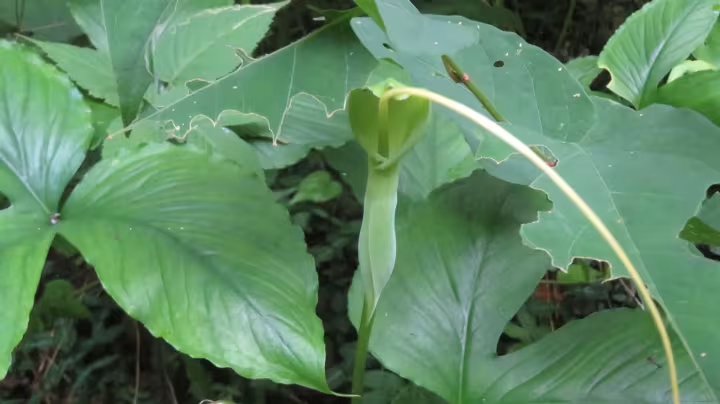
Description
Sowing dates
Pinellia tripartita is a perennial herb belonging to the Araceae family. In agricultural practice, it is primarily propagated vegetatively by harvesting and replanting daughter tubers, which ensures genetic consistency across the plantation.
The planting season typically begins in early spring once the soil temperature consistently reaches 10–12 degrees Celsius. Ensuring the soil has warmed up is critical to prevent the tubers from rotting due to cold, anaerobic conditions.
Tubers should be planted at a depth of approximately 5 to 8 centimeters. Pre-sprouting in a warm, sheltered environment before planting can significantly accelerate initial growth and improve the uniformity of the crop stand.
A standard planting density involves spacing plants 20 centimeters apart within rows, with 30 centimeters between rows. This spacing allows sufficient room for the tubers to expand throughout the growing season.
While seed propagation is possible, it is rarely used for commercial production due to the slow maturation of seedlings. However, seed-based breeding remains essential for developing new, high-yielding varieties with improved disease resistance.
Growing requirements
This crop thrives in loose, humus-rich, and well-draining soils. A light loam or sandy-loam texture is ideal, as it facilitates the expansion of the tubers and prevents the waterlogging that often leads to root rot.
Pinellia tripartita is naturally shade-tolerant. In commercial fields, it is often necessary to provide partial shade using netting or intercropping with taller plants to protect the leaves from excessive heat and direct sunlight.
The optimal temperature for development ranges from 18 to 25 degrees Celsius. Extreme heat can lead to early dormancy, while cold snaps in the late spring or early autumn can prematurely kill the foliage.
Consistent moisture is required for robust tuber development. While the soil should never be waterlogged, it must remain moist throughout the peak growing season to support the plant's metabolic activity.
Organic matter enrichment, such as well-rotted compost, should be incorporated into the soil before planting. Mineral fertilizers, particularly those with balanced NPK ratios, can be applied in split doses to support vegetative growth.
Yield
The primary yield component of Pinellia tripartita is the tuber, which contains alkaloids and starch used in pharmaceutical applications. Yields are heavily dependent on the duration of the growth cycle and the quality of field maintenance.
In a well-managed plantation, tubers reach commercial size within two to three years. The final yield is measured by the total biomass of harvested tubers per hectare, adjusted for moisture content and purity.
Quality control during the harvest process is vital. Sorting tubers by size allows farmers to separate marketable medicinal raw materials from smaller tubers, which are reserved for the next planting cycle.
The efficiency of the crop is often limited by the incidence of disease, which can cause significant losses. Effective soil management and the use of certified, disease-free planting material are the best ways to stabilize yields.
Post-harvest processing, including thorough cleaning and proper drying, is essential to reach market standards. High-quality dry material commands a premium price in the medicinal herb market.
Main diseases and pests
Soil-borne pests like wireworms and white grubs pose the most significant threat, as they consume and damage the tubers. Integrated pest management, including crop rotation with non-host species, is recommended.
Fungal diseases, especially those causing soft rot, can proliferate during periods of high humidity or poor soil drainage. Maintaining clean fields and removing diseased plants immediately is crucial for limiting the spread.
Aphids may infest the foliage, reducing plant vigor and potentially transmitting viral infections. Regular field inspections and the use of insecticidal soaps or biological controls help manage these populations.
Nematode infestations can lead to stunted growth and poor tuber quality. Soil solarization or the use of nematicides prior to planting may be necessary in areas with a history of infestation.
- Implement strict crop rotation schedules to break pest lifecycles.
- Use certified disease-free tubers to prevent the introduction of pathogens.
- Apply preventative fungicides based on local agricultural extension guidelines.
Harvesting
Harvesting takes place once the foliage has naturally withered and turned yellow in the late autumn. This senescence indicates that the plant has successfully sequestered nutrients and carbohydrates into the tubers.
Mechanical harvesters are typically employed to lift the tubers from the soil. The equipment must be carefully calibrated to ensure that the tubers are not bruised or cut during the extraction process.
Immediately after harvest, the tubers should be cleaned of soil and debris. It is critical to store the harvested crop in a well-ventilated area to prevent moisture accumulation, which can cause rot within hours.
Drying is a precise process; the temperature should be maintained between 35 and 45 degrees Celsius to preserve the phytochemical profile of the raw material. Excessive heat will degrade the active medicinal compounds.
Stored material should be kept in cool, dry, and dark conditions to prevent oxidation. Using breathable packaging, such as jute bags, ensures longevity and quality maintenance until the product reaches the processor.