
Lagenandra dewitii
Lagenandra dewitii
Description
Growing requirements
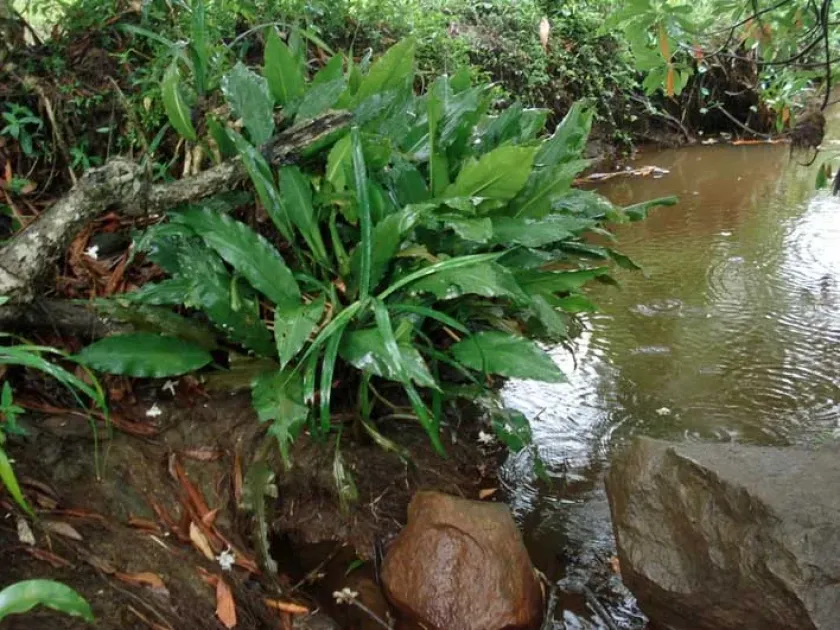
Lagenandra dewitii is a member of the Araceae family, native to the tropical wetlands and riparian zones of Sri Lanka. This perennial plant is highly prized in the aquatic plant hobby for its robust appearance and distinct leaf structure, which makes it a focal point in specialized aquariums and paludariums.
Botanically, the plant is characterized by a thick, creeping rhizome that supports lance-shaped leaves. These leaves often exhibit rich olive to brownish hues depending on the iron content in the substrate and light spectrum. The plant grows relatively slowly, making it an ideal candidate for long-term aquascaping layouts.
To ensure healthy development, Lagenandra dewitii requires a nutrient-rich substrate. A professional-grade aquarium soil or a mixture enriched with peat and laterite is highly recommended. The plant relies primarily on its root system for nutrient uptake, so a deep, oxygenated substrate is vital for sustained growth and plant vigor.
Water quality and temperature stability are paramount. The plant prefers temperatures ranging from 22°C to 27°C and thrives in slightly acidic to neutral water. Frequent water changes help maintain low levels of organic waste, which is crucial for preventing leaf tissue degradation and ensuring the plant remains free from stress.
Lighting requirements are moderate. While the plant can tolerate low-light conditions, providing a balanced spectrum for about 8 to 10 hours a day encourages better coloration and density. Avoid placing the plant under extremely high-intensity lighting, as this can trigger the rapid growth of algae on its slow-growing leaves.
Main diseases and pests
The primary threats to Lagenandra dewitii include bacterial rot, which often occurs if the rhizome is buried too deeply or if the substrate becomes anaerobic. Signs of rot include softening of the leaf stems and dark, mushy patches on the rhizome, necessitating immediate removal of affected parts and substrate cleaning.
Algae infestation, particularly hair algae and spot algae, remains a common challenge. These pests flourish in high-nutrient environments with imbalanced lighting. Regular monitoring of nitrate and phosphate levels, along with maintaining a healthy population of algae-eating fauna, is essential to keep the foliage clean and healthy.