
Lagenandra toxicaria
Lagenandra toxicaria
Description
Growing requirements
Lagenandra toxicaria belongs to the Araceae family, native to the tropical regions of Sri Lanka. It is a perennial herbaceous plant naturally found in marshy areas, riverbanks, and shaded forest understories, which defines its specific preference for high moisture and stable environmental conditions.
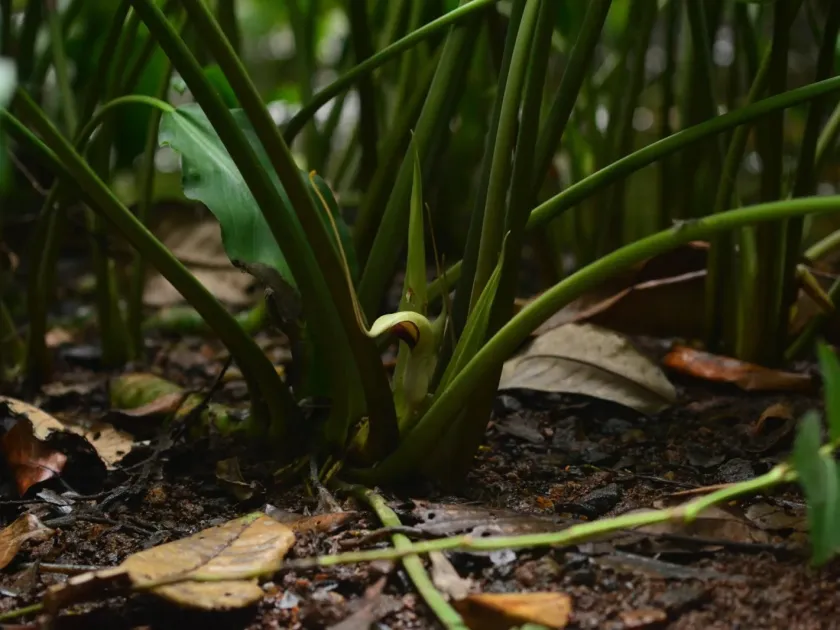
The plant features a creeping rhizome and long-petioled leaves that exhibit significant variation in size. Its specific biological profile includes the synthesis of toxic compounds, an evolutionary strategy designed to deter herbivores in its native habitat, which is why the species is classified as potentially dangerous.
Cultivation requires a steady ambient temperature ranging from 22 to 28 degrees Celsius. Direct sunlight should be avoided to prevent leaf scorching; therefore, providing filtered or diffused light is essential to mimic the plant's natural canopy-shaded environment.
The growing substrate must be nutrient-rich, airy, and slightly acidic. Consistent moisture is a critical agronomic requirement, as the plant cannot tolerate periods of dryness, which leads to rapid desiccation and loss of plant vigor within a short time frame.
In terms of usage, Lagenandra toxicaria is primarily valued for its aesthetic contribution to paludariums and specialized indoor landscapes. Due to its unique chemical properties, it is also studied for biochemical research, although handling requires strictly cautious measures due to the presence of toxic substances.
Main diseases and pests
Fungal pathogens represent the most significant threat to the culture, particularly when humidity levels remain high without adequate air movement. Stagnant water around the rhizome often triggers anaerobic conditions that favor the development of crown rot and other soil-borne diseases.
Pests like spider mites and mealybugs are common adversaries in greenhouse or enclosed cultivation settings. These organisms target the younger leaves, leading to chlorosis, stunted growth, and a loss of the ornamental value of the specimen if not addressed promptly.
Sanitation practices are essential for preventing the spread of bacterial infections. Removing necrotic tissue and ensuring that the water quality remains high, free from excessive salt accumulation, are fundamental agronomic steps to maintain plant health.
Chemical control must be used sparingly, as the plant can be sensitive to certain pesticide formulations. Integrated Pest Management (IPM) strategies, including biological controls and mechanical removal of pests, are recommended for long-term health and sustainability.
Monitoring the soil's pH and nutrient levels is necessary to ensure the plant maintains its resistance to environmental stressors. A healthy, well-nourished plant is far less susceptible to secondary infections caused by insect damage or accidental mechanical trauma.