
Lagenandra meeboldii
Lagenandra meeboldii
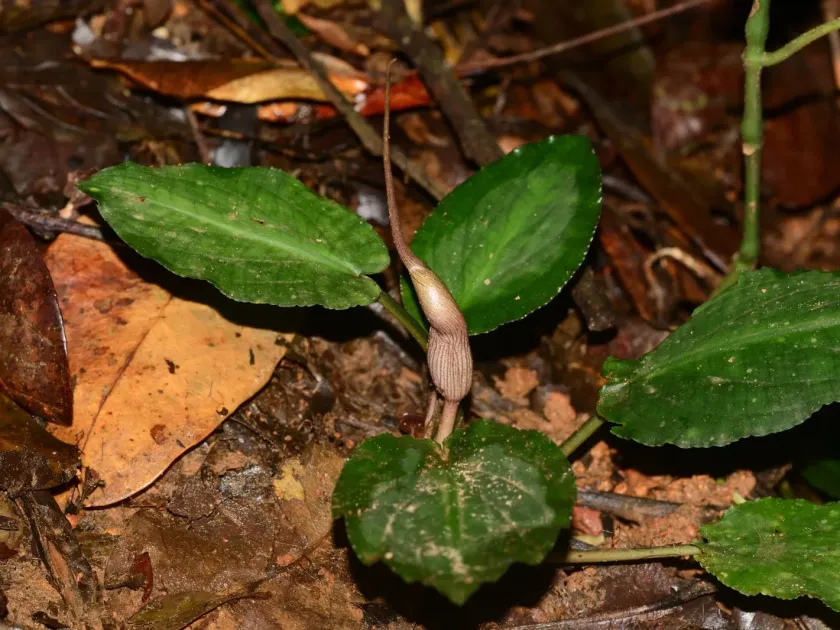
Description
Growing requirements
Lagenandra meeboldii is a prominent member of the Araceae family, native to the tropical wetlands and riparian zones of India.
Botanically, it is defined by its creeping rhizome structure and elegant, broad leaves that exhibit significant phenotypic plasticity based on water and light availability.
The species requires a nutrient-rich, acidic to neutral substrate that provides stable moisture retention while maintaining enough aeration to prevent root suffocation.
Climate requirements include consistently warm temperatures, preferably between 22 and 28 degrees Celsius, and high atmospheric humidity to prevent leaf desiccation.
Lighting should be indirect or diffused; excessive intensity often causes pigment degradation and leaf scorch, particularly in specimens grown in emersed conditions.
Main diseases and pests
The primary threats to Lagenandra meeboldii involve bacterial and fungal pathogens that target the rhizome when growing conditions become stagnant.
Pest pressure is frequently dominated by spider mites, which thrive in environments where ambient humidity is not consistently maintained at high levels.
Aphids can also colonize the new growth points of the plant, causing stunted development and increasing the risk of secondary viral infections.
Root rot is the most common management failure, typically linked to poor substrate drainage and the accumulation of organic waste within the root zone.
Regular maintenance, including the removal of decaying plant tissue and monitoring for pest outbreaks, is critical to ensuring long-term plant health.