
Bucephalandra motleyana
Bucephalandra motleyana
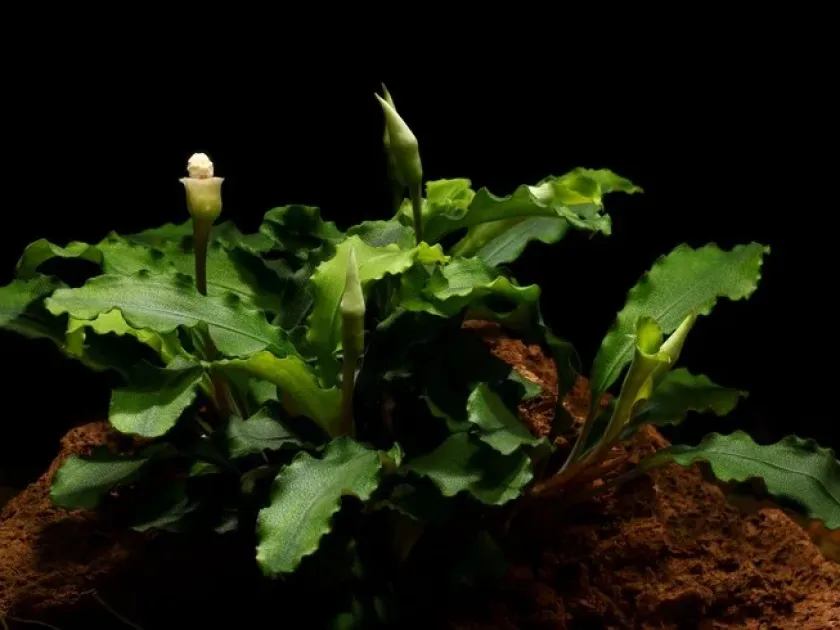
Description
Growing requirements
Bucephalandra motleyana is a fascinating member of the Araceae family, native to the tropical island of Borneo. In their natural habitat, these plants function as rheophytes, meaning they thrive in fast-flowing river currents, attaching firmly to riverbed stones and submerged wood.
For successful cultivation, a stable environment is paramount. These plants require a water temperature range of 22–26°C and a pH level between 6.0 and 7.5. Stability is more important than achieving exact parameters; avoid sudden fluctuations to prevent stress.
Lighting should be kept at a low to moderate intensity. High light levels are generally detrimental, as they encourage rapid algae growth on the leaves, which the slow-growing Bucephalandra cannot easily shed or resist.
Water circulation is essential for the health of this species. Gentle movement ensures that nutrients are efficiently delivered to the plant's surface, mimicking the flow of their native streams and preventing stagnation around the rhizomes.
The plant does not require a deep substrate. It is best to attach the plant to rocks, driftwood, or other hardscape materials using fishing line or glue until it establishes its own roots, which can take several weeks depending on environmental conditions.
Main diseases and pests
The most common physiological issue is known as "melting," where leaves suddenly decay. This is usually triggered by drastic changes in the aquarium's chemistry, temperature shifts, or the introduction of the plant into a new, unstable environment.
Algae infestation is a significant challenge due to the plant's slow growth rate. Preventing nutrient imbalances in the water column is the best way to ensure that algae do not outcompete the plant for necessary light and nutrients.
Nutrient deficiencies often manifest as chlorosis or brittle, deformed leaves. Potassium and iron levels should be carefully monitored and supplemented regularly to maintain the vibrant colors and structural integrity of the foliage.
While large pests are rare in closed aquarium systems, excessive populations of opportunistic invertebrates, such as snails, may graze on new, soft leaves. Proper tank maintenance and population control are recommended to minimize damage.
In terrestrial or paludarium settings, improper ventilation can lead to fungal infections and rot. Ensuring sufficient airflow across the leaves and maintaining appropriate humidity levels are vital for plants kept in partially emersed conditions.