
Anchomanes difformis
Anchomanes difformis
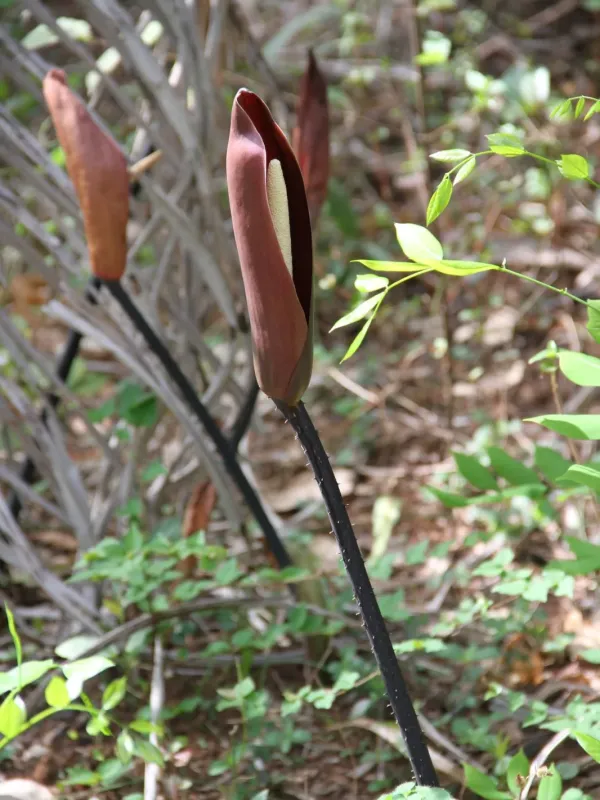
Description
Sowing dates
Planting of Anchomanes difformis typically coincides with the beginning of the rainy season to ensure sufficient moisture for successful establishment. Selecting a site with pre-warmed soil is essential for the initial sprout development.
The plant is mainly propagated vegetatively by dividing mature, healthy tubers. Each section must contain at least one dormant bud, which serves as the primary growth point for the new season.
Optimal spacing depends on the tuber size and soil fertility, ensuring that each plant has enough space to expand its underground storage organ without excessive competition from neighboring plants.
Avoid excessive watering immediately after planting, as the freshly cut tubers are highly susceptible to rotting in waterlogged soil. A well-drained site is a prerequisite for successful propagation.
Professional agronomists recommend preparing planting holes enriched with mature organic compost to boost growth, allowing the tuber to establish a strong root system rapidly after the dormancy phase.
Growing requirements
Anchomanes difformis, a member of the Araceae family, thrives in loose, deep, and organic-rich soils. Proper soil aeration is vital for the development of large, healthy tubers throughout the growing season.
The crop requires a stable, high-temperature tropical environment. Significant deviations in temperature can slow down metabolic processes and negatively affect the accumulation of starch in the tubers.
While the plant benefits from high humidity, it strictly requires well-draining conditions to prevent root rot. Sandy loams or well-structured forest soils are generally considered optimal for high productivity.
The species is well-adapted to partial shade conditions, making it an excellent candidate for agroforestry systems where it can grow beneath the canopy of fruit or timber trees.
Applying mulch is a recommended practice to maintain stable soil temperature and moisture levels, protecting the tubers from the intense heat of the sun during shorter dry spells within the season.
Yield
The yield of Anchomanes difformis is determined by the length of the growing period and the quality of field management, particularly weed control. A clean plot significantly improves the final weight of the harvested tubers.
Under optimal conditions with regular organic amendments, the plant shows strong biomass growth. It is highly valued in local agriculture as a reliable food source that can withstand suboptimal soil conditions.
The harvest is timed according to the natural yellowing and senescence of the foliage. This phase indicates that the plant has ceased its vegetative growth and successfully concentrated energy in the tubers.
Consistent use of organic fertilizer, such as compost or well-rotted manure, promotes significant tuber size increase compared to unmanaged wild populations of the same species.
After harvesting, careful sorting is necessary to separate high-quality tubers for consumption from smaller ones that can be used for replanting, thus ensuring the sustainability of the next crop cycle.
Main diseases and pests
Soil-borne fungal pathogens are the primary threats to Anchomanes difformis, especially when grown in poorly drained areas where water tends to stagnate for extended periods.
Various soil insects, particularly larvae, can feed on the tubers, creating wounds that invite bacterial infections. Integrated pest management practices are essential to keep these populations under control.
Nematode infestations can damage the root system, causing stunted growth and lower yields. Crop rotation is the most effective cultural method to mitigate these subterranean risks.
Foliar fungal spots can appear during periods of high humidity and poor ventilation. While the tubers are the main objective, a healthy leaf canopy is required for maximum carbon assimilation.
Preventative measures, such as sourcing healthy tubers, rotating crops, and maintaining appropriate planting density, are more effective than curative chemical treatments for this type of crop.
Harvesting
Harvesting is performed once the foliage has completely died back and dried naturally. This signifies the dormancy period and the ideal time for retrieving the tubers from the ground.
Manual digging using garden forks is the standard procedure to minimize physical damage to the tuber surface. Avoiding nicks and cuts is crucial for long-term storage viability.
Following extraction, the tubers must be cleaned of soil and air-dried in a shaded, well-ventilated area. Rapid surface drying helps to seal any minor wounds and prevents rotting.
Stored tubers should be kept in a cool, dark, and dry environment. Adequate airflow between tubers is necessary to prevent the buildup of moisture, which is the main trigger for storage decay.
Traditional methods involve placing the tubers on elevated racks or in well-aerated woven containers, which provide the best balance of humidity and oxygen for long-term preservation.