
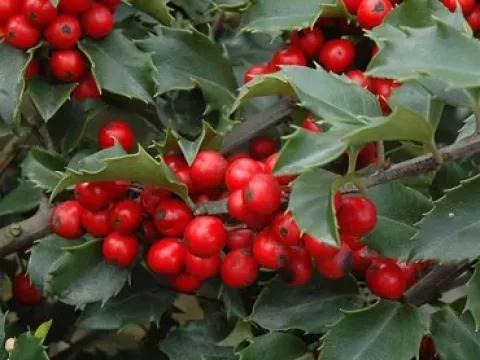
Holly hybrid
Ilex hybrids
Holly hybrid (Ilex hybrids) belongs to the Aquifoliaceae family and represents a diverse group of cultivars bred for ornamental purposes. These plants are highly valued for their glossy evergreen foliage and, in female cultivars, their vibrant red berries that persist through winter.
What the section contains
Holly hybrid
The ideal growing medium for this culture consists of rich, well-draining soil with a slightly acidic to neutral pH. Proper soil structure is essential, as these plants are sensitive to waterlogged conditions which can lead to root system degradation and poor vigor.
Holly hybrids thrive in locations with partial shade, although many modern hybrids are tolerant of full sun provided they receive sufficient soil moisture. High sun exposure in hot regions often requires mulching to keep the root zone cool and moisture-retained.
Environmental requirements include protection from desiccating winter winds, which can lead to leaf burn and dieback. In colder climates, establishing a robust mulch layer around the base is a standard practice to insulate roots from sudden freeze-thaw cycles.
Maintenance includes light pruning to shape the canopy and the application of fertilizers specifically formulated for acid-loving shrubs in early spring. Consistent moisture levels, especially during the first two years after planting, are vital for successful establishment.
Holly leaf miners are the most specialized pests, creating unsightly serpentine tunnels in the foliage. Management involves applying systematic insecticides during the adult fly emergence period to break the life cycle.
Root rot, typically caused by Phytophthora species, poses a significant threat in soils with poor drainage. Prevention is the key, focusing on site selection and ensuring the crown of the plant is slightly elevated above the surrounding soil.
Scale insects are common pests that feed on sap, often leading to sooty mold growth on the leaf surfaces. Regular inspection of the underside of leaves and stems allows for early mechanical removal or chemical treatment.
Canker diseases can affect branches that have been damaged by mechanical injury or cold stress. Prompt pruning of infected wood, followed by sterilization of tools, prevents the spread of pathogens throughout the shrub.
Aphids can infest young tender shoots during the spring growth flush, causing leaf curling. While rarely fatal, they weaken the plant and serve as a vector for other complications, making early control a recommended agricultural practice.