
Dahoon holly
Ilex cassine
Description
Growing requirements
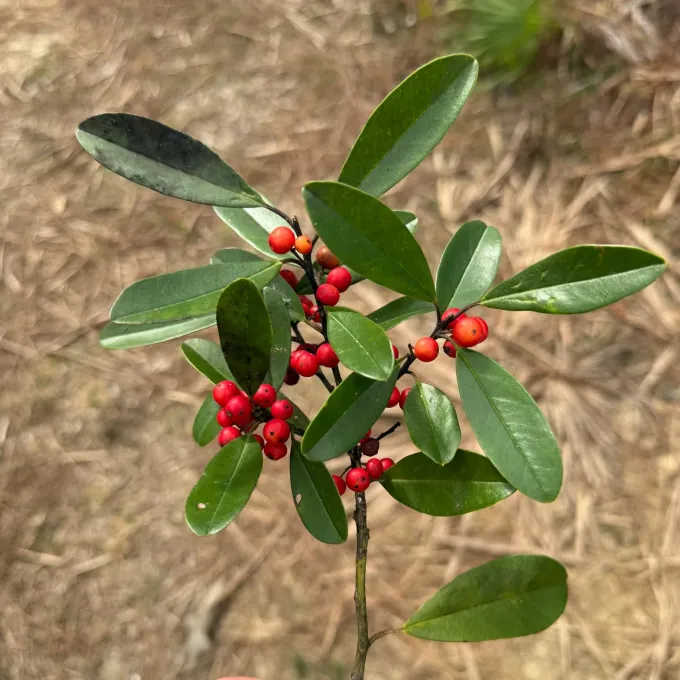
Dahoon holly (Ilex cassine) is a member of the Aquifoliaceae family, known for its status as an evergreen shrub or small tree native to the coastal plains of the southeastern United States. It is highly valued for its dense, glossy foliage and persistent bright red berries.
The cultural requirements for this plant focus heavily on soil moisture. It thrives best in wetlands, bogs, and areas with consistently moist, acidic soil, although it can adapt to landscape conditions if provided with regular supplemental irrigation.
Climatic adaptability is limited to warmer regions, as this species is not highly frost-tolerant. It performs best in full sun to partial shade, which encourages the development of a lush, compact form essential for ornamental use.
Soil preparation should include organic amendments to simulate the native forest floor conditions, ensuring low pH levels. Maintaining a thick layer of organic mulch is essential to preserve soil moisture and regulate ground temperature.
In terms of agricultural management, regular pruning is often required to maintain the desired shape and size, especially when used in residential or public landscaping projects to create hedges or screens.
Main diseases and pests
Dahoon holly is susceptible to several pests, most notably scale insects and aphids, which attach to the undersides of leaves and stems, sucking sap and reducing the plant's overall vigor.
Fungal diseases are a frequent issue, particularly leaf spot and powdery mildew. These are more prevalent in environments with poor air circulation or extended periods of high humidity and stagnant water.
Root rot, often caused by soil-borne pathogens, poses a significant threat if the planting site is poorly drained. This can lead to yellowing leaves, premature leaf drop, and eventually the death of the plant.
To prevent these threats, growers should practice proper spacing to ensure adequate airflow and avoid overhead irrigation that leaves foliage wet for long periods.
Integrated Pest Management (IPM) strategies, including the use of horticultural oils and systemic fungicides, are recommended for controlling outbreaks while minimizing the impact on the local ecosystem.