
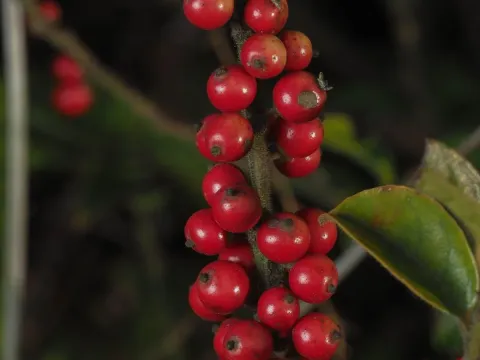
Hairy holly
Ilex pubescens
Hairy holly (Ilex pubescens) belongs to the Aquifoliaceae family and is recognized as a significant medicinal plant species native to subtropical regions of Southern China.
What the section contains
Hairy holly
The plant thrives in warm and humid climatic conditions, which are essential for maintaining its evergreen nature and ensuring the continuous production of secondary metabolites.
Ideal soil conditions for this crop include well-drained, fertile loamy soils with a pH ranging from slightly acidic to neutral, avoiding any prolonged waterlogging at the roots.
Proper agronomic management involves regular fertilization with nitrogen-rich organic inputs and adequate spacing to ensure that each plant receives enough sunlight for photosynthesis.
Providing a consistent water supply during dry spells is critical for young plantations, as it directly impacts the biomass accumulation and the overall health of the root system.
The primary threats to Ilex pubescens include various fungal pathogens that affect foliage quality, especially when humidity levels exceed recommended thresholds for extended periods.
Pest management is focused on controlling scale insects and aphids, which can sap the plant's vitality and significantly reduce the yield of commercial-grade leaves.
Effective prevention strategies include maintaining air circulation through strategic pruning and using botanical extracts to manage insect populations naturally.
Root rot remains a concern in poorly drained soils; therefore, maintaining soil aeration is considered one of the key pillars of successful crop protection.
Farmers should implement a regular monitoring system to identify signs of stress or pest infestation, allowing for localized treatments before outbreaks become widespread.
The harvest focuses on the leaves of the hairy holly, which are widely utilized in pharmaceutical industries for extracting bioactive compounds beneficial to vascular health.
Harvesting usually takes place during the vegetative peak, when the concentration of essential chemical components within the leaf tissues is at its historical maximum.
Mechanical harvesting methods are increasingly being adopted to improve efficiency, provided that the equipment ensures the integrity and cleanliness of the collected foliage.
Post-harvest processing involves careful drying and moisture regulation to stabilize the raw material, ensuring that its pharmacological activity is preserved for distribution.
The global demand for high-quality herbal ingredients has positioned Ilex pubescens as a valuable crop for sustainable agro-pharmaceutical production in its native regions.