
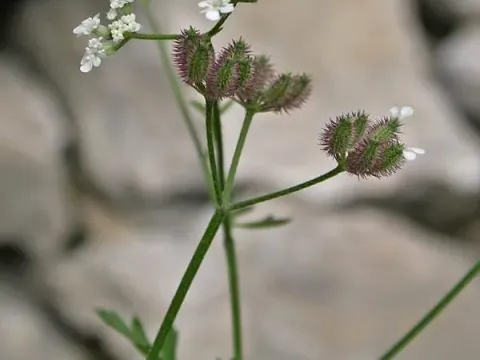
Torilis africana
Torilis africana
Torilis africana, an annual herbaceous plant, requires precise timing for sowing, which typically aligns with the onset of the cool season or early spring, depending on the specific climatic zone.
What the section contains
Torilis africana
Optimal germination is achieved when soil temperatures are consistently above 10 degrees Celsius, allowing the seeds to establish a strong root system before the onset of rapid vegetative growth.
Sowing depth is a critical parameter; seeds should be placed at a depth of 1 to 2 centimeters. Shallow sowing ensures that the emerging seedlings can easily penetrate the soil surface.
Row spacing should be maintained at approximately 30 to 45 centimeters, which provides sufficient space for root development and facilitates mechanical weeding operations during the early stages.
Consistent soil moisture immediately following the sowing process is vital for uniform emergence, particularly in areas where rainfall might be inconsistent during the early planting window.
As a member of the Apiaceae family, Torilis africana thrives in well-drained, fertile soil types ranging from sandy loams to silty soils, provided there is adequate organic matter content.
The plant demonstrates a strong preference for full sun exposure. While it has some adaptability to partial shade, excessive cover significantly restricts growth and reduces final seed production.
Climatic requirements involve a temperate range, ideally between 18 and 25 degrees Celsius during the main growing season, with moderate humidity levels to prevent physiological stress.
Proper soil aeration is essential for this species. It is highly sensitive to waterlogged conditions, which often lead to immediate root decay and loss of vigor within the plant population.
Maintaining a balanced nutrient regime, specifically adequate potassium and phosphorus during the bolting phase, is crucial for supporting the development of floral structures and fruit maturity.
Fungal diseases represent the most significant threat to the crop, with powdery mildew being the most prevalent, especially in conditions where air circulation between plants is restricted.
Aphid infestations are a common pest problem, causing substantial damage by weakening the plant through nutrient sap extraction and acting as potential vectors for plant viruses.
The celery fly and related dipteran species can cause significant foliar damage, as their larvae create mining tunnels within the leaves, thereby inhibiting the plant's photosynthetic capacity.
Soil-borne pathogens, including various types of rot and nematodes, pose a severe risk if crop rotation practices are not strictly followed in agricultural management systems.
Integrated Pest Management (IPM) strategies, including the use of resistant varieties where available and timely intervention with biological or chemical controls, are recommended for maintaining healthy yields.