
Steganotaenia araliacea
Steganotaenia araliacea
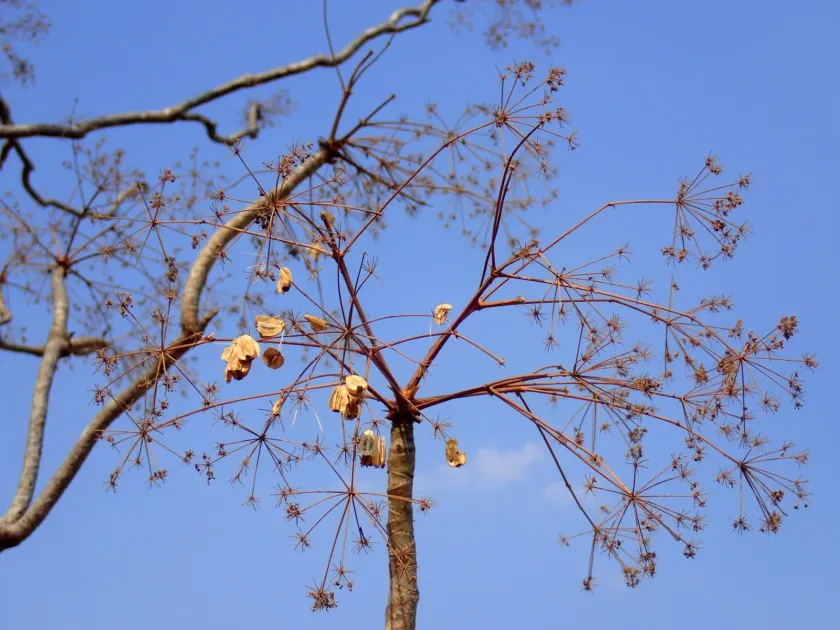
Description
Growing requirements
Steganotaenia araliacea is a perennial woody plant belonging to the Apiaceae family. Unlike common garden herbs in this family, it grows as a small tree or shrub, typically reaching heights of several meters in its natural habitat.
Native to tropical Africa, it is widely distributed across savannas and woodland regions. The species is highly adapted to semi-arid environments, thriving in regions that experience alternating wet and dry seasons.
The plant requires well-drained, sandy or rocky soils for optimal development. Its deep root system allows it to survive in areas with limited water availability, making it an excellent candidate for xerophytic cultivation.
Botanically, it is known for its aromatic properties and its complex phytochemical composition. The leaves and bark are rich in essential oils and various bioactive compounds, which have been documented in traditional ethnopharmacology.
Commercial potential for this plant lies in the extraction of bioactive ingredients for the pharmaceutical industry. Its resilience to heat and drought makes it an attractive species for experimental dryland agriculture.
Main diseases and pests
The most significant threat to Steganotaenia araliacea in agricultural settings is waterlogging. Excessive moisture leads to root decay and fungal pathogens that can destroy the plant in a very short time.
Leaf-eating insects, such as beetles and caterpillars, can significantly reduce foliage density during the active growth phase, leading to stunted overall development.
In humid microclimates, fungal infections such as leaf spots or mildew may appear, necessitating regular monitoring and proper ventilation between individual specimens.
Bark-boring insects present a specific risk to mature trees, as they can tunnel into the woody parts, weakening the structural integrity of the plant and exposing it to secondary pathogens.
Environmental stress caused by sudden temperature shifts or extreme humidity levels often makes the plants more susceptible to opportunistic infections from soil-borne bacteria.