
Ostericum maximowiczii
Ostericum maximowiczii
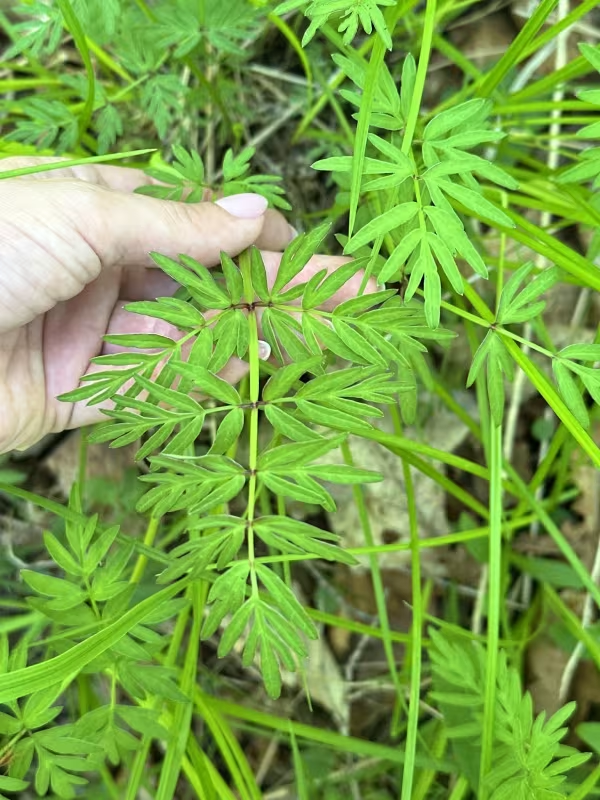
Description
Sowing dates
Ostericum maximowiczii, a member of the Apiaceae family, is a perennial herb that holds potential for specialized cultivation. Propagation in agricultural settings is primarily achieved through seeds, which require specific preparation for successful germination.
For optimal results, seeds should be sown in late autumn to undergo natural stratification during the winter. If spring sowing is preferred, seeds must be subjected to a cold stratification process for several weeks to break dormancy and ensure uniform emergence.
The recommended planting pattern involves row spacing of 45–60 centimeters, allowing the plant enough space to develop its robust basal rosette of leaves. Seeds should be sown at a shallow depth of 1–2 centimeters, as they require sufficient light exposure for initial growth.
Given its deep taproot system, the plant does not respond well to transplanting once established. Therefore, selecting a permanent location for the crop is essential to ensure long-term productivity and avoid mechanical damage to the root system.
During the first year, the crop focuses on vegetative growth and nutrient accumulation in the roots. The plant typically transitions to the reproductive stage, producing flower stalks, in its second or third year of development.
##requirements##Ostericum maximowiczii prefers well-lit sites but can tolerate partial shade. It thrives in fertile, loamy soils that provide good aeration. The soil reaction should be neutral or slightly acidic to promote maximum nutrient uptake.
Adequate soil moisture is critical; however, the crop is highly sensitive to waterlogging. Proper drainage systems are essential to prevent root rot, especially in regions with high rainfall or heavy soil profiles.
Cultural practices include regular inter-row cultivation to maintain soil structure and aeration. Keeping the plot free of weeds is crucial, particularly during the early stages of growth when the young plants are easily suppressed by competitive flora.
The application of organic amendments, such as well-rotted compost, during soil preparation provides a solid foundation for the crop. Nitrogen-rich fertilizers applied in early spring can further stimulate vegetative development.
The plant is well-adapted to cooler climates, exhibiting significant cold tolerance. In areas with harsh winters, applying a light mulch of organic matter can protect the crown and ensure successful overwintering of the root system.
##yield##The economic value of Ostericum maximowiczii is primarily derived from its roots and foliage, which contain pharmacologically active compounds. The yield of plant material is highly dependent on environmental conditions and the intensity of the cultivation management.
Harvesting the roots for medicinal purposes is most effective when plants are 3–4 years old. At this stage, the concentration of active constituents reaches its peak, ensuring high-quality raw material for the pharmaceutical industry.
Yield efficiency in commercial production is achieved through optimized spacing and appropriate fertilization. Proper post-harvest handling, including drying in shaded, well-ventilated areas, is essential to preserve the biological activity of the harvested biomass.
While the foliage can be harvested periodically, care must be taken not to deplete the plant's resources. Maintaining sufficient leaf area ensures the plant can continue photosynthesis and store necessary carbohydrates in the roots for future growth cycles.
Quality control remains a priority, as the market for herbal extracts demands consistency. Proper storage conditions, away from direct sunlight and humidity, are required to ensure the product maintains its integrity throughout the shelf life.
##threats##Like many Apiaceae species, Ostericum maximowiczii is susceptible to fungal pathogens. Powdery mildew and various leaf spot diseases are common, especially when planting density is too high or air circulation is insufficient.
Root rot is a major threat in poorly drained or overly saturated soils. Additionally, pests such as aphids or leaf miners can cause significant damage to the foliage, reducing the plant's overall vigor and yield potential.
Integrated pest management strategies, including crop rotation and proper spacing, are recommended to minimize the risk of disease outbreaks. Avoiding continuous monoculture of Apiaceae crops helps to prevent the buildup of soil-borne pathogens.
Biological control agents are preferred over chemical pesticides to maintain the purity of the raw material. Regular field scouting is necessary to detect early signs of infestation and apply targeted, eco-friendly interventions as needed.
Strengthening plant immunity through micro-nutrient fertilization and maintaining an optimal planting density are key strategies to improve resistance. Careful monitoring during wet periods helps to mitigate the impact of disease-conducive weather conditions.