
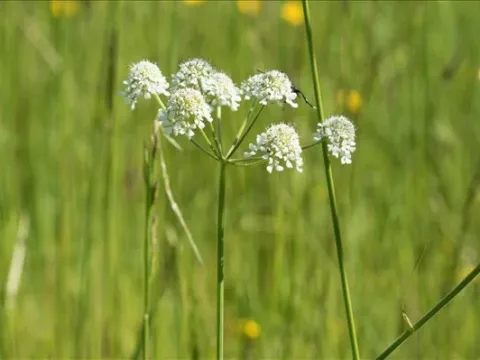
Peucedanifolia water dropwort
Oenanthe peucedanifolia
Peucedanifolia water dropwort (Oenanthe peucedanifolia) belongs to the Apiaceae family. It is a herbaceous perennial plant naturally found in damp meadows, river floodplains, and waterlogged pastures, reflecting its evolutionary adaptation to wetland environments.
What the section contains
Peucedanifolia water dropwort
The plant features distinct tuberous roots that store energy, supporting regrowth after dormant winter periods. Its stems are erect and branched, usually reaching heights between 30 and 70 cm, which contributes to its biomass potential during the growing season.
The culture thrives in rich, moist soils with a high water table. Agricultural success depends heavily on maintaining soil hydration, as the plant possesses limited tolerance to drought conditions, which can lead to metabolic stress and wilting of the foliage.
Regarding climate, this species prefers temperate zones with consistent moisture levels. It is quite hardy and capable of surviving cold winters, making it a viable candidate for cultivation in wet lowland areas where other crops might struggle.
Management practices emphasize the importance of site selection. Since it is not a primary field crop, it is often utilized in the context of meadow management or niche medicinal applications where specific soil moisture levels can be reliably maintained.
Disease management is critical, particularly preventing fungal infections such as root rot. These pathogens thrive in conditions with poor drainage or stagnant water, posing a severe risk to the root system and plant longevity.
Pest pressure mainly comes from insects like aphids and various larvae that feed on the umbellifers' stems and flowers. Integrated pest management strategies should be applied to protect the plant from early-season infestations that impede growth.