
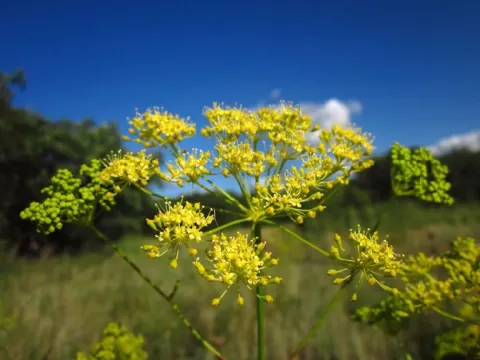
Peucedanum
Peucedanum
Peucedanum seeds have a prolonged dormancy period, which requires cold stratification to improve germination rates. Traditional sowing occurs in late autumn, allowing the seeds to undergo a natural winter chill directly in the field.
What the section contains

Peucedanum
When spring sowing is preferred, seeds must be cold-treated for 30-45 days before being planted. The seeds should be sown in rows 45-60 cm apart to ensure proper air circulation and space for root development.
The optimal planting depth is 1-2 cm. After sowing, the soil should be lightly compacted to ensure firm contact between the seeds and the soil moisture, which is essential for uniform emergence.
Seed application rates range between 8-12 kg per hectare, depending on germination tests. During the first year of growth, the plants develop slowly as they build their root systems, requiring diligent weed control.
Target plant density is approximately 150,000 to 200,000 plants per hectare. This density maximizes yield while maintaining plant health and reducing the risk of competition for nutrients.
Peucedanum is a perennial herbaceous plant belonging to the Apiaceae (Umbelliferae) family. It is native to temperate Eurasia, where it is often found in forest edges and meadows with rich, deep soil.
The plant is highly winter-hardy and capable of withstanding frost, although it thrives best during long growing seasons with consistent temperate conditions. It prefers a stable climate for root development.
Well-drained loamy or sandy soils with a near-neutral pH are ideal for this crop. Waterlogging must be strictly avoided, as stagnant moisture can quickly lead to root rot and loss of plant vigor.
Peucedanum thrives in full sun, which is necessary for the optimal accumulation of secondary metabolites, such as coumarins, in the roots. Shaded conditions significantly reduce the quality of the raw material.
In crop rotation, it should not follow other Apiaceae crops to prevent the buildup of specific soil-borne pathogens. Good management involves selecting sites that have not hosted related crops for at least three years.
The yield of Peucedanum is heavily dependent on the plant's age, with the second or third year typically providing the highest quality and quantity of medicinal root material.
Expected yields for dry roots range from 1.5 to 3 tons per hectare under proper management. Above-ground biomass yield can reach 5-8 tons per hectare depending on growing conditions and frequency of cutting.
Applying phosphorus and potassium fertilizers during the growing season encourages robust root growth. Careful nutrient management is vital to avoid excessive nitrogen, which can lead to low root quality.
Harvesting is typically performed using root-lifting machinery, such as modified potato diggers. Precision is required during the lifting process to ensure the roots remain intact, as damage lowers market value.
Post-harvest, roots must be immediately cleaned and washed. Drying should take place at temperatures not exceeding 50 degrees Celsius to preserve the essential oils and medicinal components within the plant tissue.
The crop is susceptible to fungal diseases like powdery mildew, particularly in humid seasons. Maintaining proper row spacing helps minimize humidity buildup and reduces the risk of such fungal infections.
Root rot is the most serious threat to Peucedanum, often resulting from poor soil drainage or excessive irrigation. Prevention involves selecting well-aerated soils and maintaining strict water management protocols.
Pests such as umbellifer moths can cause significant damage by feeding on flowering heads and leaves. Aphids may also infest the plant, necessitating regular field monitoring and targeted insecticide application if needed.
Soil-dwelling larvae, such as wireworms, can damage young roots. Crop rotation and pre-planting soil treatment are the primary methods for mitigating the impact of these underground pests.
An integrated pest management approach, emphasizing early detection and biological control where possible, is highly recommended to sustain organic or conventional production of this crop.
Harvesting for roots occurs in the autumn of the second or third year, when the tops of the plant start to wither. This stage marks the peak of active compound concentration within the root system.
If seeds are also required, the process may be split: umbels are harvested first for seed collection, followed by the digging of the roots once the plants have entered a full dormant state.
When harvesting leaves for biomass, the best timing is at the very beginning of the flowering phase. A second harvest may be possible late in the season if soil moisture remains adequate for regrowth.
Freshly harvested material must be kept out of direct sunlight to prevent degradation of its active components. Swift transport to the processing facility is crucial for maintaining overall product quality.
Dried roots must be stored in a cool, dry, and well-ventilated warehouse. A high-quality final product should exhibit a firm texture and a clean, aromatic scent characteristic of the species.