
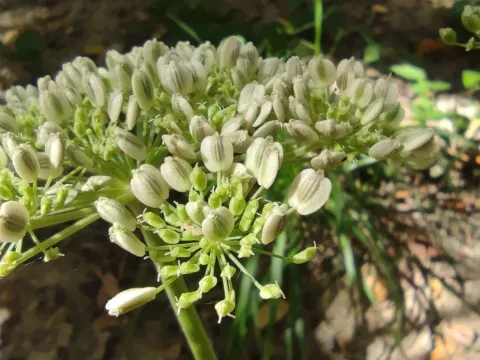
Peucedanum hispanicum
Peucedanum hispanicum
Peucedanum hispanicum is a perennial herbaceous plant belonging to the Apiaceae family. Its life cycle begins with the development of a basal rosette, followed by the growth of a robust flower-bearing stem in subsequent years.
What the section contains
Peucedanum hispanicum
The seeds of this species possess deep dormancy mechanisms. Consequently, sowing is most effective in late autumn, allowing the seeds to undergo natural stratification in the soil during the winter months, which significantly improves germination rates in the spring.
When sowing in the spring, it is strictly necessary to cold-stratify the seeds for at least 6-8 weeks at temperatures ranging between +2°C and +5°C. This mimics natural conditions and prepares the embryo for emergence.
The optimal sowing depth is shallow, usually around 1-2 centimeters. Covering seeds too deeply often results in failure to emerge, as the energy reserves in the seed are insufficient to push through a thick layer of soil.
A row spacing of 45-60 centimeters is recommended for field cultivation. This layout facilitates weeding, ensures adequate aeration, and prevents the spread of moisture-related pathogens within the plantation.
This crop thrives in regions with moderate climates and requires significant sun exposure. Open, unshaded fields are essential for its vigorous growth and for maximizing the accumulation of secondary metabolites in the roots.
Well-drained, fertile soil is a prerequisite for successful cultivation. Sandy loams or light loamy soils with a neutral pH are ideal. Excessive moisture in the root zone is detrimental, often leading to rot and developmental delays.
Although mature plants show reasonable drought tolerance due to their deep taproots, consistent moisture during the seedling stage is critical. Regular watering should be provided during dry spells to maintain steady growth rates.
Fertilization with phosphorus and potassium is beneficial during the early spring vegetative growth phase. These nutrients contribute to root development and improve the plant's overall resistance to cold and environmental stress.
The plant demonstrates high winter hardiness, allowing it to survive in regions with significant frost. Adequate weed management in the first year of establishment is vital, as young plants compete poorly with aggressive weed species.
The yield of Peucedanum hispanicum is primarily focused on the root mass, which is usually harvested after two or three years of growth. This timeline allows the plant to accumulate sufficient biological material for commercial use.
Harvestable aerial biomass peaks during the flowering stage. However, frequent harvesting of the green mass can weaken the plant and reduce root quality, so it is necessary to balance harvesting cycles with the plant's recovery periods.
Productivity is highly dependent on planting density and soil fertility. Experiments suggest that moderate density ensures that each plant receives enough solar radiation and soil nutrients to reach its maximum weight potential.
The quality of the yield, measured by the concentration of volatile oils and medicinal compounds, is influenced by the climatic conditions of the growing season. Warm, dry weather prior to harvest is typically associated with better chemical profiles.
Proper field management, including timely thinning of excess seedlings, ensures that the remaining plants grow without competition. This results in a more uniform harvest and higher total yield per hectare.
Like many Apiaceae species, this plant is susceptible to fungal diseases such as powdery mildew and Cercospora leaf spot. These pathogens flourish in humid, stagnant conditions or crowded plantations.
Insect pests, including various aphids and the carrot moth, can damage the leaves and floral parts. Integrated pest management, focusing on biological controls and manual monitoring, is the most sustainable approach to protection.
Root rot remains a major threat in fields with poor drainage or heavy clay content. Ensuring proper soil preparation and strictly following a crop rotation plan (at least 4-5 years) are the best ways to mitigate these risks.
Weeds not only compete for nutrients but also serve as reservoirs for viruses that can affect the crop. Maintaining a clean field through mechanical weeding is essential for the longevity of the perennial stand.
Prophylactic measures are more effective than reactive treatments. Removing and destroying infected plant material at the first sign of disease is critical to prevent the spread of localized outbreaks across the field.
Roots are harvested in late autumn when the plant enters dormancy and the translocation of nutrients into the root system is complete. This timing ensures the highest concentration of active compounds.
Mechanical diggers or specialized plows are used to carefully extract the roots from the soil. The process must be gentle, as deep cuts or abrasions to the root surface can lead to storage rot and loss of quality.
Once extracted, the roots are cleaned of soil and debris, washed with water, and prepared for the drying process. Removing surface moisture immediately is important to prevent mold development during the initial stages of storage.
Drying should be performed at controlled, moderate temperatures, typically below 45°C. High heat can volatilize essential oils, thereby reducing the medicinal or commercial value of the harvested material.
The final product is stored in airtight, moisture-proof containers in a cool, dark environment. Proper storage conditions allow the harvest to retain its potency and quality for up to two years.