
Lachenal's water dropwort
Oenanthe lachenalii
Description
Growing requirements
Lachenal's water dropwort (Oenanthe lachenalii) is a perennial herbaceous plant belonging to the Apiaceae family. In its natural habitat, the crop prefers damp environments, including coastal zones, salt marshes, and marshy areas.
The plant is well-adapted to high water tables and can tolerate moderate soil salinity. It thrives in maritime climates, requiring high atmospheric humidity and sufficient moisture levels within the root zone.
For optimal growth, Lachenal's water dropwort prefers fertile, loamy, or clayey soils with a neutral to slightly alkaline pH. The plant is sensitive to severe substrate desiccation, so areas with deep groundwater levels are unsuitable for its stable development.
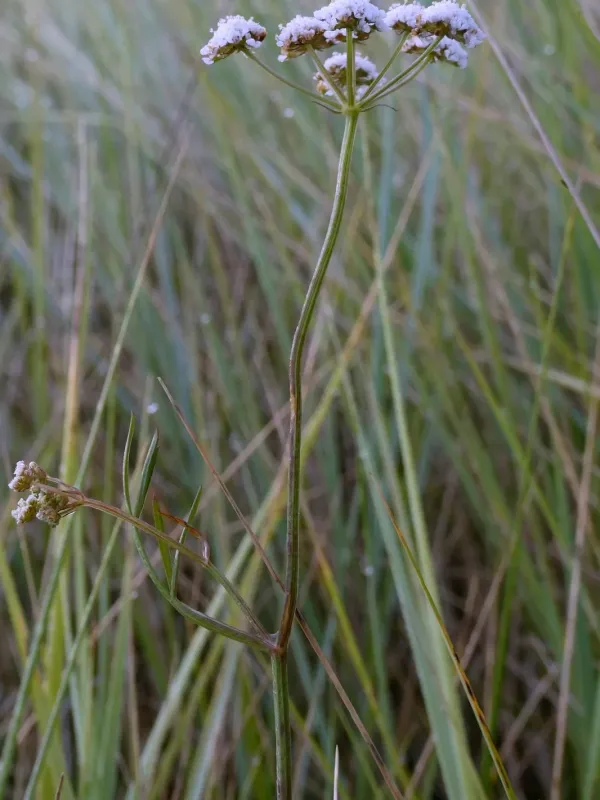
Biologically, the plant features a taproot system and an erect stem that can reach heights of 60 to 100 centimeters. Its leaves are pinnately compound, a common trait among many umbellifers, and the inflorescence consists of a complex umbel.
In agricultural and ecological contexts, Lachenal's water dropwort can be used for the restoration of degraded wetland areas or as a component of wet meadows. It is essential to note that many species in this genus contain specific toxins, and thus its use for fodder requires strict management of the vegetation composition.
Main diseases and pests
The primary diseases affecting this crop include fungal infections that thrive in waterlogged conditions, such as powdery mildew or various leaf rusts. Prevention focuses on adhering to proper planting density and maintenance of drainage levels.
Among pests, the greatest threat is posed by insects that attack the root collar and inflorescences, particularly larvae of umbellifer-feeding moths and certain species of aphids. Regular field monitoring is necessary to prevent widespread infestations.