
Laserpitium besseanum
Laserpitium besseanum
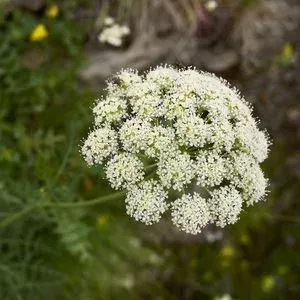
Description
Growing requirements
Laserpitium besseanum is a perennial herbaceous plant belonging to the Apiaceae family. It is recognized for its unique adaptation to mountainous habitats, making it a specialized species with specific requirements for cultivation in agricultural settings.
The plant thrives in well-drained, lime-rich soils. It is highly intolerant of waterlogging, so soil aeration and drainage are the most critical factors for successful development. Sandy or gravelly loams that mimic their natural rocky environment are ideal.
Full sun exposure is essential for this culture. Laserpitium besseanum requires high light intensity to support the complex synthesis of its aromatic compounds. It should be grown in open fields where it will not be shaded by taller crops or trees.
Climatic requirements involve moderate temperature regimes typical of mountain slopes. The plant is hardy enough to survive cold winters, but it is sensitive to the combination of high humidity and freezing temperatures, which can cause crown rot during dormancy.
Agricultural maintenance involves minimal fertilizer inputs, as the plant is adapted to nutrient-poor soils. Regular weed control is necessary, especially in the first year of growth, as the plant has a slow initial development rate and struggles with competition.
Harvesting
The economic value of Laserpitium besseanum is primarily linked to its essential oil content, which is used in pharmaceutical and food applications. As a niche crop, it is grown for specialized markets focusing on high-quality botanical extracts.
Harvesting should occur at the peak of the flowering stage to ensure the highest yield of secondary metabolites. Using specialized mechanical harvesting equipment is difficult, so manual or semi-automated cutting is often preferred to preserve plant health.
Post-harvest processing requires immediate drying in a controlled environment. Keeping temperatures low during the drying phase is vital to ensure that the delicate essential oils do not evaporate or degrade during the process.
Storage should be conducted in airtight, opaque containers to protect the dried material from light and moisture. This prevents oxidation and ensures the retention of the plant's characteristic aroma and chemical potency over long periods.
Future agricultural prospects for this species include its integration into sustainable herb production systems. The plant's ability to grow in challenging conditions makes it an interesting candidate for diversifying production on marginal lands.