
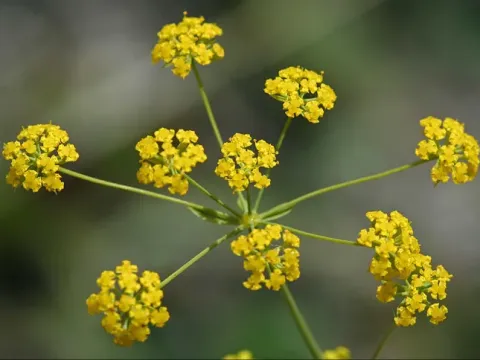
Bupleurum chinense
Bupleurum chinense
Bupleurum chinense is a perennial herbaceous plant belonging to the Apiaceae family. It is primarily cultivated for its roots, which are highly valued in traditional medicine for their bioactive compounds.
What the section contains
Bupleurum chinense
The propagation of this crop is usually conducted through seeds. Because seeds often exhibit dormancy, cold stratification is highly recommended to improve germination rates in spring.
Seeds are sown in rows spaced 40–50 centimeters apart, at a shallow depth of 1–2 centimeters. Proper soil contact and consistent moisture are essential for the seedlings to establish effectively during the first few weeks.
During the first year of growth, the plant focuses on developing a basal rosette of leaves and a taproot. The growth rate is relatively slow, making early-stage weed control critical for survival.
Commercial plantations are often maintained for two to three years before harvest. This allows the plant to reach maturity and accumulate sufficient concentrations of active medicinal substances.
The plant thrives in open, sunny locations with well-drained, fertile soil. Sandy loams or light clay soils are preferred to ensure optimal aeration for the developing taproot system.
Water management is crucial as Bupleurum chinense does not tolerate waterlogging. Excessive moisture in the soil, especially during winter months, is the primary cause of root rot and crop failure.
The field must be kept free of weeds, particularly in the first year of growth, as the young plants are poor competitors. Regular cultivation of the inter-row space helps in maintaining soil structure and moisture.
Fertilization should prioritize potassium to enhance root quality and overall stress resistance. Nitrogen application should be moderate to avoid excessive vegetative growth at the expense of root development.
This species is generally cold-hardy, but it prefers regions with distinct seasons. Proper site selection in well-drained areas prevents the negative impacts of frost heaving and stagnant water.
Harvesting for commercial purposes focuses on the dried roots of the plant. Yields typically reach 1.5 to 2 metric tons of dried root per hectare, depending on soil quality and planting density.
The concentration of saikosaponins, the key active ingredients, reaches its peak by the end of the second year. Harvesting too early or too late can significantly impact the medicinal potency of the final product.
Post-harvest processing involves cleaning the roots from soil and removing any fine lateral branches. Quality control at this stage is essential to meet pharmaceutical standards.
Efficiency in harvesting is increased through mechanical digging tools that lift the roots without breakage. Careful handling ensures that the structural integrity of the long taproot is preserved.
Drying is the final and most important step for long-term storage. Roots should be dried in controlled environments at 40–50 degrees Celsius to prevent degradation of chemical compounds.
Root rot is the most significant threat to Bupleurum chinense, especially in heavy or poorly drained soils. Fungal pathogens thrive in such environments, necessitating strictly controlled irrigation practices.
Powdery mildew can affect the foliage during periods of high humidity and moderate temperatures. While it may not kill the plant, it significantly reduces the plant's ability to photosynthesize effectively.
Pests like aphids and certain caterpillars targeting Apiaceae can cause localized damage. Integrated pest management using biological controls is preferred to maintain the quality of the herbal product.
Nematode infestations can lead to deformed roots, significantly lowering the market value of the crop. Proper crop rotation is the most effective strategy to manage soil-borne pests.
Preventive measures include the removal of infected plant residues and the use of healthy, certified seeds. Early detection through regular field scouting allows for timely and targeted interventions.
The harvest period typically occurs in late autumn when the leaves have turned yellow and the plants have entered dormancy. This is when the roots are most concentrated with nutrients and active compounds.
Mechanical digging is the standard method for lifting the roots. Plows or specialized blades are used to cut the soil profile up to 40 centimeters deep, allowing the root to be extracted fully intact.
Roots should be collected immediately after digging and transported to the cleaning facility to prevent prolonged exposure to heat and sunlight, which can cause essential oil evaporation.
After cleaning and grading, the roots are sliced into uniform segments to facilitate drying. Uniformity is key for ensuring consistent moisture levels throughout the batch during the dehydration process.
The dried product should be kept in cool, dark, and dry conditions. Proper storage prevents mold growth and preserves the pharmacological integrity of the herbal material for an extended shelf life.