
Astrantia carniolica
Astrantia carniolica Jacq.
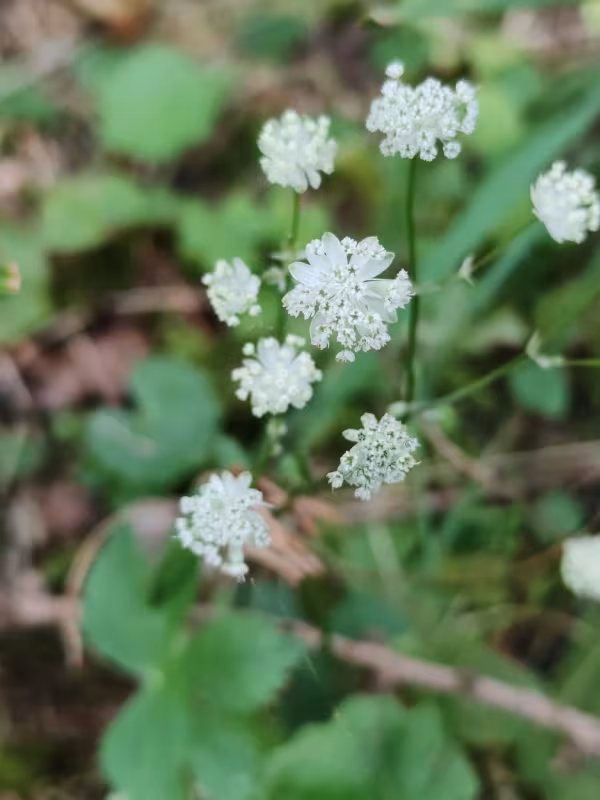
Description
Sowing dates
Astrantia carniolica is a resilient herbaceous perennial belonging to the Apiaceae family. Originally native to the mountainous regions of the Eastern Alps, it has become a popular agricultural and ornamental crop due to its unique star-shaped inflorescences and structural foliage.
Propagation is typically carried out via seeds that require a cold stratification period to break dormancy. Sowing in late autumn or early spring after artificial chilling is crucial for achieving a uniform germination rate and ensuring vigorous initial growth of the plantlets.
Growing requirements
This species thrives in partial shade, mimicking its natural habitat of forest edges and alpine meadows. The ideal soil for cultivation is consistently moist, nutrient-rich, and well-draining, preventing water stagnation that could lead to root rot during dormant winter periods.
Standard agronomic practice involves maintaining a stable moisture level throughout the growing season. While Astrantia carniolica is relatively hardy, providing a layer of organic mulch can help retain soil moisture and regulate soil temperature during hot summer months.
Main diseases and pests
Slugs and snails are the primary pests affecting young growth, especially in damp environments. Additionally, the plant may suffer from powdery mildew if spacing is too dense, making proper air circulation and regular monitoring essential components of the integrated pest management program.
Harvesting
The plant is extensively used in the cut flower industry and landscape design. Harvesting is performed when the bracts are fully developed; the flowers are known for their excellent vase life and can also be dried for use in decorative floral arrangements.