
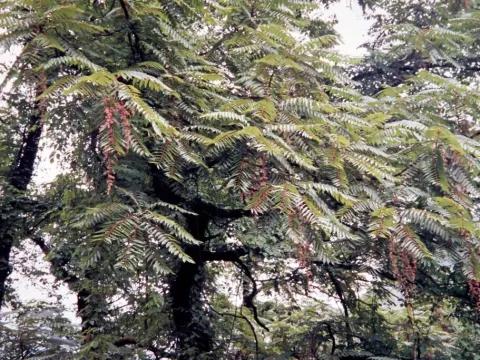
Hooker's poison oak
Toxicodendron hookeri
Hooker's poison oak (Toxicodendron hookeri) belongs to the Anacardiaceae family. This woody shrub or small tree is native to the mountainous regions of Southeast Asia, specifically documented in the Yunnan province of China and parts of Myanmar.
What the section contains
Hooker's poison oak
The plant thrives in moderately moist, well-drained soils enriched with organic matter. It exhibits a strong preference for semi-shaded environments, naturally occurring in the understory of dense forest ecosystems where light filtration is consistent.
Cultivation requires a stable climatic environment free from extreme frost, as the vegetation is sensitive to sudden temperature fluctuations. An ideal soil pH ranges from slightly acidic to neutral to ensure optimal nutrient uptake for the developing root system.
Botanically, the plant is characterized by deciduous leaves that are compound and imparipinnate, often displaying a distinct gloss on the upper surface. These features are critical for identifying the species within its natural range.
It is essential to note that all parts of the plant contain urushiol. This oily organic compound is a potent allergen that can cause severe contact dermatitis and systemic allergic reactions in humans, requiring strict safety protocols during any manual labor or handling.
Commercial utilization of Toxicodendron hookeri is strictly limited due to its high toxicity. In specific industrial contexts, the plant is harvested as a raw material source for local varnish production and technical oils used in traditional handicrafts.
The plant has been historically utilized in local pharmacognosy. Certain traditional practitioners process the plant matter to neutralize the toxic urushiol, though such practices are highly specialized and require intensive processing to ensure safety and efficacy.
Yield productivity in controlled plantations is highly dependent on planting density and the consistency of site maintenance. Proper pruning techniques allow for the maximum accumulation of biomass, which serves as the primary harvestable unit.
Agronomic yield assessments focus on the volume of harvestable shoots rather than fruit production. Personnel involved in the harvesting cycle must utilize comprehensive personal protective equipment to prevent direct exposure to the resinous exudates.
The economic viability of the species is tied to the demand for natural botanical resins. Despite the availability of synthetic alternatives, the plant maintains a niche market within its native geographic range due to the specific properties of its lacquer-producing components.
Common pathological issues include fungal infections of the foliage, which typically occur in environments with poor soil aeration or stagnant moisture around the root crown of the shrubs.
Pest pressures often involve various species of leaf beetles and spider mites. These are particularly problematic during the drier phases of the growing season, which can compromise the plant's physiological defenses.
Preventative management is key to controlling disease spread, relying heavily on proper sanitation, including the prompt removal and disposal of diseased or damaged branch sections to protect the plantation.
Chemical control must be implemented with caution. The use of pesticides is discouraged to minimize the risk of residue accumulation in the resinous compounds, which could complicate downstream processing and industrial application.
- Frequent monitoring for pest colonies and fungal signs.
- Strict management of soil drainage to prevent root rot.
- Optimized spatial arrangement to promote airflow between individual specimens.