
Halothamnus hierochunticus
Halothamnus hierochunticus
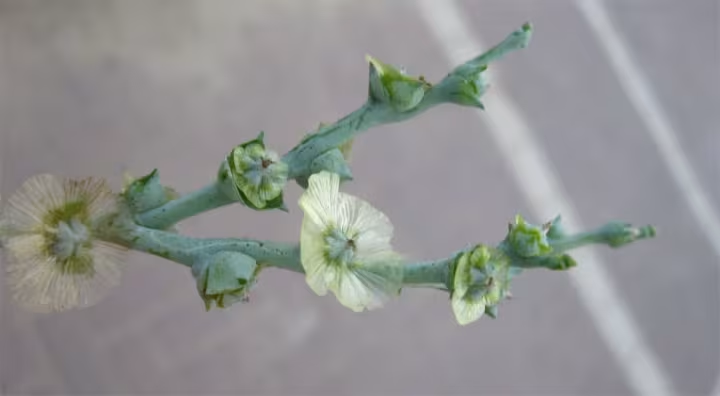
Description
Sowing dates
Halothamnus hierochunticus is a typical xerophyte and halophyte, meaning its natural sowing period follows seasonal rains. In agricultural practice, early spring is the optimal time for sowing, once soil temperatures reach 15–20 degrees Celsius.
For successful germination, seeds require conditions that mimic the desert environment. Sowing is done superficially with a light layer of sand, as the seeds are highly sensitive to depth and require exposure to the elements to trigger growth.
Irrigation immediately after sowing should be moderate to prevent seed rot, as the species is highly adapted to dry conditions. Seedlings usually emerge within 10–14 days under stable thermal conditions.
The spacing between rows should be at least 60–80 cm to allow for the extensive development of the taproot system. The plant reacts poorly to transplanting once the first true leaves have formed.
In specialized nurseries, seeds are sown in autumn, allowing them to undergo natural winter adaptation before sprouting in the following spring.
Growing requirements
Belonging to the Amaranthaceae family, this plant is one of the most resilient species for saline and arid soils. It thrives in substrates with high concentrations of sodium, chlorides, and sulfates.
The crop requires intense sunlight throughout the entire day. Any form of shading leads to thin, weak stems, a reduction in vital biochemical compounds, and overall plant stress.
Regarding soil preferences, the plant favors light, well-aerated sandy or loamy soils. It maintains metabolic activity in extremely dry conditions through specific succulent mechanisms.
The thermal growth range is broad, spanning from cool winters to extremely hot summers. The plant exhibits high resistance to arid winds and soil erosion, making it useful for land stabilization.
Mineral nutrition should be balanced, focusing on micronutrients. Excessive use of organic fertilizers can suppress development, as the plant is specifically adapted to nutrient-poor desert ecosystems.
Yield
The economic value of Halothamnus lies in its ability to produce green biomass in areas where other crops cannot survive. Yield depends heavily on precipitation levels and the depth of the water table.
With proper pasture management, the plant provides multiple regrowth cycles per season. Its nutritional value remains high even during the summer vegetation pause, serving as a reliable fodder source.
Seed productivity is consistently high, allowing the plant to be used for the restoration of degraded arid lands. Mechanical harvesting of seeds is effective once the fruits have fully matured.
It provides a stable feed source for camels, sheep, and goats, serving as a critical reserve food supply during years of severe drought.
Economic efficiency is achieved through minimal requirements for irrigation and chemical inputs compared to traditional agricultural crops.
Main diseases and pests
Halothamnus is characterized by high resistance to most agricultural pests, primarily due to the presence of alkaloids and high salt content within its tissues.
The primary threats to young seedlings include rodents and locusts, which may damage the growing point during the first few weeks. Regular monitoring is advisable only during the early stages of vegetation.
Fungal diseases are rarely an issue in natural desert environments. However, root rot can occur if there is excessive artificial irrigation or waterlogging in heavy soils.
Disease prevention involves choosing sites with good drainage and strictly adhering to sowing rate recommendations to prevent density-related moisture retention.
In rare instances, aphids or spider mites may occur, but the damage rarely reaches an economic threshold that justifies the use of insecticides.
Harvesting
Harvesting the aerial part of the plant for fodder is best performed by mowing at the onset of the flowering phase, when nutrient concentration is at its peak.
For seed collection, the harvest is carried out at the end of the season when the fruits have turned brown. Using specialized harvesters allows for the minimization of seed loss during cutting.
The plant demonstrates rapid regrowth after mowing, provided the root system remains undisturbed and minimal moisture is available in the soil.
Harvested biomass must be thoroughly dried under direct sunlight to prevent mold growth and preserve its nutritional qualities for long-term storage.
Seed storage should take place in dry, cool, and well-ventilated facilities to ensure the maintenance of high germination rates over several years.