
Halostachys belangeriana
Halostachys belangeriana
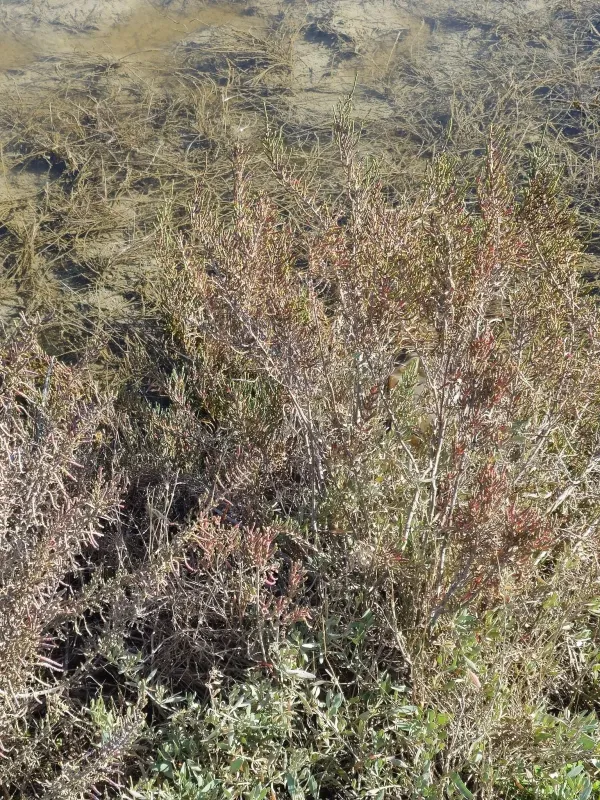
Description
Growing requirements
Halostachys belangeriana is a perennial subshrub belonging to the Amaranthaceae family. It is a highly specialized halophyte, evolutionary adapted to survive and thrive in soils with extreme salinity levels that would be fatal to most agricultural crops.
The plant is native to the arid regions of Central Asia, specifically found in salt marshes, salt lake shores, and saline depressions across Kazakhstan, Uzbekistan, and Turkmenistan. Its distribution is closely linked to environments with saline groundwater tables.
Morphologically, it features succulent, jointed stems that allow the plant to store water efficiently. The leaves are reduced to small scales, an adaptation that significantly reduces water loss through transpiration, which is crucial for survival in harsh desert climates.
The cultural requirements are strictly defined by its halophytic nature. It thrives in high-salt substrates and requires intense solar radiation. It is an extremely hardy species capable of tolerating long periods of drought and high temperatures.
From an agronomic perspective, Halostachys belangeriana is considered a pioneer species for soil restoration. Its ability to extract salts from the soil and stabilize shifting desert sands makes it a vital tool for ecological engineering in arid zones.
Yield
The primary economic use of Halostachys belangeriana is as a forage resource for livestock, particularly in remote desert regions. It provides a reliable source of nutrition for camels, sheep, and goats during the late autumn and winter seasons.
The biomass of the plant is rich in minerals and trace elements, making it an essential component of the diet for pastoral herds. It helps maintain animal health in environments where traditional fodder is completely absent.
Beyond its value as fodder, the plant is extensively utilized for desertification control. By preventing wind erosion and sand dune movement, it protects surrounding areas and improves the overall resilience of the local ecosystem.
There is emerging interest in the pharmaceutical potential of the species. Research indicates the presence of secondary metabolites in its succulent tissues, which could be useful in medical or biochemical applications once properly extracted and processed.
Sustainability in yield depends on proper management of the harvesting cycle. While the plant is resilient, over-harvesting or over-grazing can lead to population depletion, making rotational use of grazing fields essential for long-term productivity.
Main diseases and pests
Pests that target Halostachys belangeriana are generally specialized insects, such as specific leaf-eating beetles and weevils. While these pests rarely cause total crop failure, they can significantly reduce the biomass density in localized areas.
Human activities represent the most significant threat to the plant. Excessive grazing and the destruction of natural habitats for agricultural expansion are primary causes of the reduction in natural population densities across its range.
Pathogenic fungi are not a major concern due to the high saline content of the plant tissues, which acts as a natural deterrent. However, weakened plants under abnormal environmental stress may exhibit susceptibility to common soil-borne fungal infections.
Hydrogeological changes, including the lowering of groundwater tables, pose a critical danger to existing populations. As a plant dependent on subsoil moisture, rapid desiccation of the habitat leads to irreversible mortality of the stands.
Conservation efforts are vital to protect these unique halophytic plant communities. Strategic planning and sustainable land-use policies are required to prevent the collapse of these fragile desert ecosystems under increasing climate pressure.