
Anabasis aphylla
Anabasis aphylla
Description
Growing requirements
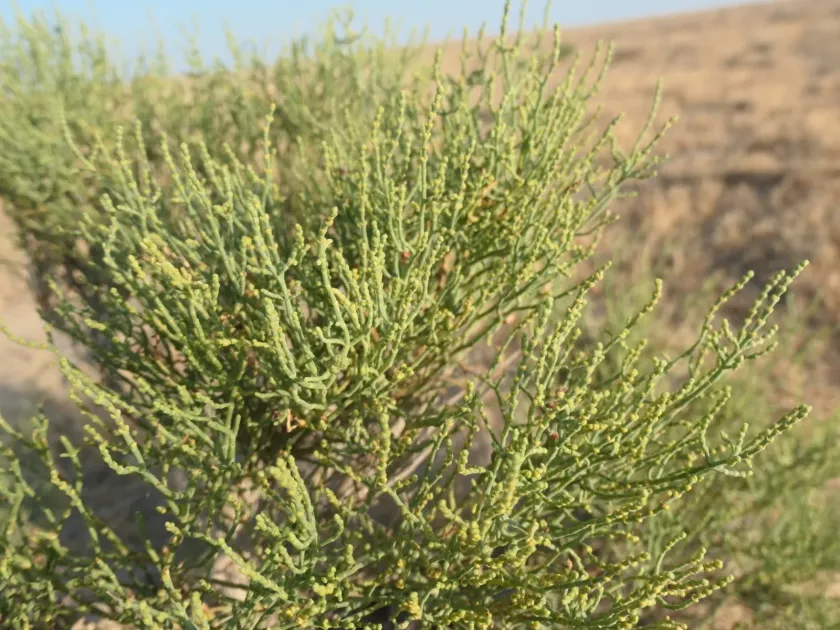
Anabasis aphylla, belonging to the Amaranthaceae family, is a perennial subshrub native to the arid regions of Central Asia. Its morphology is perfectly adapted to survive in harsh desert conditions, featuring jointed, green, leafless stems that perform photosynthesis.
This species thrives in various desert soils, including saline, clay, and stony substrates. Its extreme salt tolerance makes it a valuable candidate for greening and utilizing degraded lands that are unsuitable for traditional crop production.
The plant requires high solar irradiance and thrives in areas with high summer temperatures. It is highly drought-resistant and possesses a deep root system capable of accessing subsurface moisture, allowing it to withstand long periods without rainfall.
Agronomic management is characterized by low intensity. However, proper spacing is crucial to prevent competition for moisture during the establishment phase. The plant is sensitive to waterlogging, which must be strictly avoided to prevent root diseases.
Anabasis aphylla serves as an important industrial crop primarily due to its content of the alkaloid anabasine. This substance is extensively used in pharmacology and as a raw material for eco-friendly organic pesticides.
Main diseases and pests
Anabasis aphylla exhibits remarkable natural resistance to most agricultural pathogens. Its bitter, alkaloid-rich tissues act as a natural deterrent against many generalist insects and soil-borne fungal diseases.
In its native habitat, pests are generally confined to specialized insects that have evolved to overcome the plant's chemical defenses. These populations are typically kept in check by natural ecological controls.
The main threats to cultivated populations include small rodents that may feed on the succulent stems, especially during the early growth stages. Controlling these pests in open desert environments requires integrated approaches.
Weed management is only critical during the first year of the stand's life. Once the plants have established a mature canopy, their competitive edge effectively limits the presence of invasive flora within the plantation.
While the plant is hardy, extreme winter conditions without snow cover combined with rapid temperature fluctuations can occasionally lead to tissue damage in more sensitive varieties.
Harvesting
Harvesting of Anabasis aphylla focuses on the green stems, which are processed to extract alkaloids. Harvesting is scheduled according to the accumulation cycle of active chemical constituents, usually during the peak of vegetative growth.
Mechanical harvesting is the preferred method for large plantations, using specialized equipment to trim the stems while ensuring that the root crown remains intact for regrowth in subsequent seasons.
Post-harvest management involves immediate drying of the collected biomass. Controlled drying under sheltered, well-ventilated conditions is essential to stabilize the chemical composition and prevent degradation.
Quality control is a critical step, ensuring the raw material is free from sand, rocks, and debris, which can impact the efficiency of the extraction process at processing facilities.
Proper harvest intervals must be observed to allow the plant to replenish its energy reserves, ensuring the long-term sustainability and productivity of the plantation over many years.