
Anabasis aretioides
Anabasis aretioides
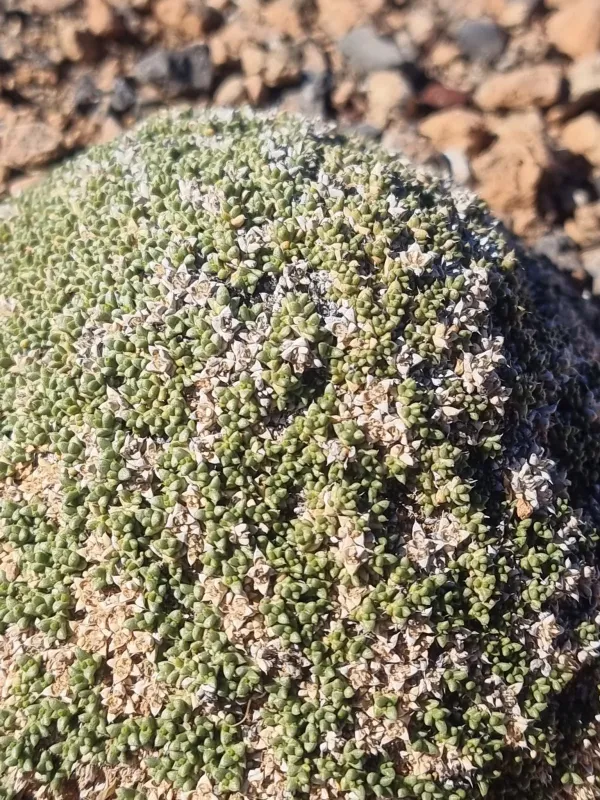
Description
Growing requirements
Anabasis aretioides is a compact, cushion-forming semi-shrub belonging to the Amaranthaceae family. This species is highly specialized for survival in harsh, high-altitude desert environments where moisture is consistently scarce throughout the year.
The plant exhibits an extremely slow growth rate, characterized by a dense, mat-like habit that protects its core tissues from intense solar radiation and drying winds. Its morphology is a textbook example of xerophytic adaptation to arid conditions.
The preferred habitat for this species includes rocky or gravelly substrates with poor nutrient content. It demonstrates remarkable tolerance to soil salinity and significant diurnal temperature fluctuations typical of its native range.
Geographically, the distribution is restricted to specific desert regions where the plant acts as a vital pioneer species for soil stabilization. Cultivation is not currently established as an agricultural practice due to the plant's highly specific ecological niche requirements.
In the ecosystem, Anabasis aretioides serves as a key component in maintaining desert stability and preventing soil erosion. Its unique biological traits make it a subject of interest for studying plant resistance to extreme physiological stress.