
Anabasis articulata
Anabasis articulata
Description
Growing requirements
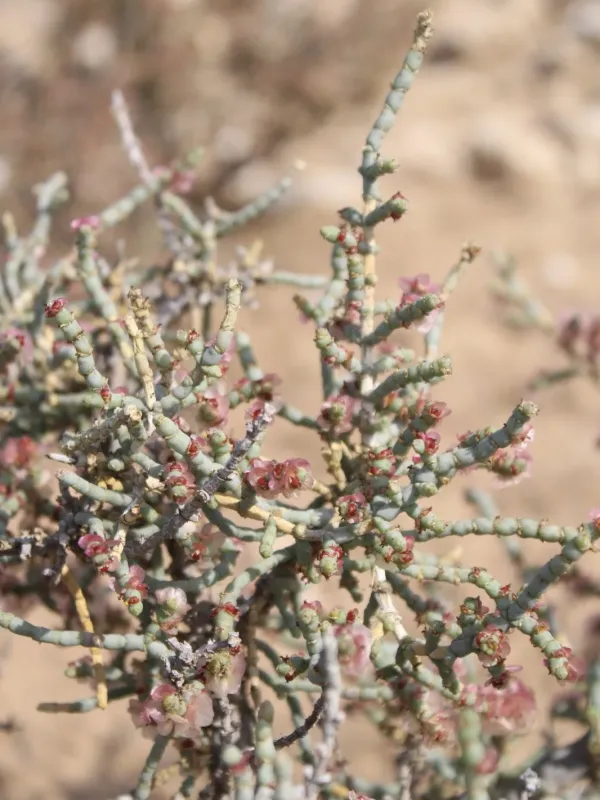
Anabasis articulata is a perennial subshrub belonging to the Amaranthaceae family. It is a highly specialized desert plant, well-adapted to harsh environments characterized by extreme heat, high salinity, and prolonged water scarcity.
The native habitat of this species stretches across North Africa, the Middle East, and parts of Central Asia. It thrives in arid ecosystems, where it colonizes rocky soils, sandy deserts, and saline basins that are largely unsuitable for most common crop varieties.
Botanically, the plant is distinguished by its succulent, jointed stems that store moisture effectively. This adaptation enables the plant to survive extended droughts while maintaining its structural integrity and physiological processes.
Regarding climatic requirements, Anabasis articulata demands full sun exposure and high temperatures. It is highly sensitive to waterlogging, necessitating well-draining soils to prevent root decay and ensure long-term plant survival.
This species is essential for desert ecosystem preservation. By anchoring soil with its deep root system, it plays a vital role in preventing wind erosion and fighting desertification in vulnerable arid agricultural landscapes.
Harvesting
The main agricultural and industrial value of Anabasis articulata lies in its chemical composition. The plant serves as a natural source of alkaloids, particularly anabasine, which is valued for its potent insecticidal properties.
Harvesting is usually conducted in areas where the plant grows naturally or on small-scale cultivation plots. The process involves cutting the green stems at specific developmental stages to maximize the concentration of bioactive compounds.
Safety is a priority during the harvest, as the plant contains toxins that can be harmful to humans and livestock. Protective gear is strictly required for workers engaged in handling the freshly cut plant material.
Once harvested, the material is dried under controlled conditions to preserve the integrity of the chemical compounds. Rapid drying in shade or well-ventilated areas is necessary to prevent degradation of the alkaloids before extraction.
The processing phase involves complex extraction techniques in chemical plants. These methods isolate the active components from the plant biomass, facilitating the production of specialty agrochemicals or pharmacological ingredients for global markets.