
Anabasis setifera
Anabasis setifera
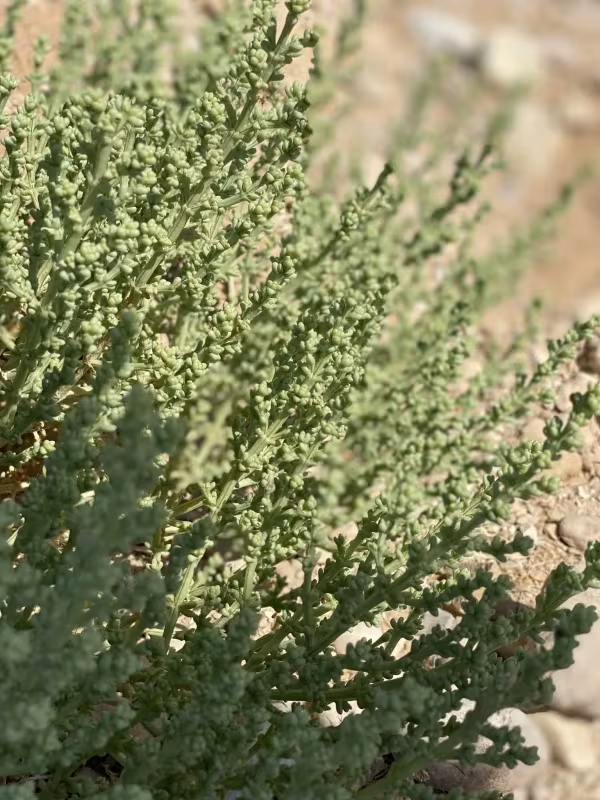
Description
Growing requirements
Anabasis setifera belongs to the Amaranthaceae family, serving as a distinct example of xerophytic flora adapted to arid and semi-arid desert environments. This perennial subshrub is highly specialized for survival in extreme climate conditions.
The plant demonstrates remarkable evolutionary adaptations, including succulent stems designed for water storage and a deep, extensive root system that penetrates through saline soil layers to access deep groundwater.
Successful cultivation requires soil with high salinity levels, often unsuitable for traditional crops. It thrives in sandy or clay-heavy serozems, where its physiological resistance to salt toxicity becomes a competitive advantage.
Climatic requirements for optimal growth involve intense solar radiation and high temperature ranges characteristic of desert zones. The species remains dormant during cold periods and requires dry air to prevent physiological stress.
The agricultural value of this plant lies in its secondary metabolites, particularly alkaloids like anabasine. It is recognized as a technical crop utilized in pharmaceutical and agrochemical industries.
Main diseases and pests
The primary biotic threats to Anabasis setifera include desert locusts and other Orthoptera species, which can cause significant damage to the succulent biomass during infestation outbreaks.
Pathogenic threats are generally limited to fungal infections that occur during unusual weather patterns involving prolonged moisture, leading to crown rot and reduced structural integrity.
Weed interference during the early establishment phase is a critical challenge. Although the plant is hardy, it requires a clean field environment initially to develop sufficient biomass for commercial yield.
Grazing pressure from livestock poses a potential risk, as wild or cultivated stands can be physically damaged by trampling or consumption, necessitating proper fencing or land management.
Maintaining balanced field management practices, including proper drainage and preventing soil waterlogging, is the most effective strategy to mitigate risks from common pathogens in arid ecosystems.