
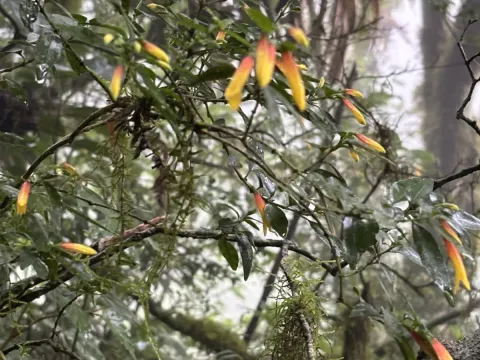
Brazilian plume
Justicia floribunda
Justicia floribunda, commonly known as Brazilian plume or king's crown, is a member of the Acanthaceae family. It is a perennial evergreen shrub originating from the rainforests of South America, primarily Brazil.
What the section contains
Brazilian plume
The crop thrives in temperatures between 18°C and 24°C. It is highly sensitive to cold drafts and rapid temperature fluctuations, which can trigger leaf drop and inhibit the development of flower buds.
Well-drained, nutrient-rich soil is essential for the healthy growth of this plant. A substrate composed of peat moss, loam, and coarse sand provides the necessary aeration and moisture retention capacity.
High humidity levels are crucial for the vitality of the plant, as it is adapted to tropical environments. Frequent misting or the use of humidity trays is recommended, especially in indoor settings or greenhouses.
Bright, indirect light is the preferred lighting condition. Direct sunlight can cause leaf chlorosis and scorching, therefore, placement in areas with filtered sunlight is recommended for optimal photosynthetic performance.
Spider mites are the most common pest associated with Justicia floribunda. They thrive in dry conditions and can quickly infest the foliage, leading to yellowing and premature leaf senescence.
Other major threats include whiteflies and mealybugs, which feed on the plant sap and weaken the overall structure. These pests often congregate on the undersides of leaves and in the axils.
Root rot caused by fungal pathogens is a significant risk when plants are overwatered or grown in soil with poor drainage. Once established, root rot is difficult to treat, often resulting in systemic decline.
Effective management includes regular monitoring and the use of integrated pest management strategies. Insecticidal soaps or neem oil are typically effective for localized infestations if detected early.
Cultural control is vital for disease prevention. This includes maintaining proper spacing to ensure adequate air circulation, avoiding overhead watering, and ensuring that the pots have sufficient drainage holes.