
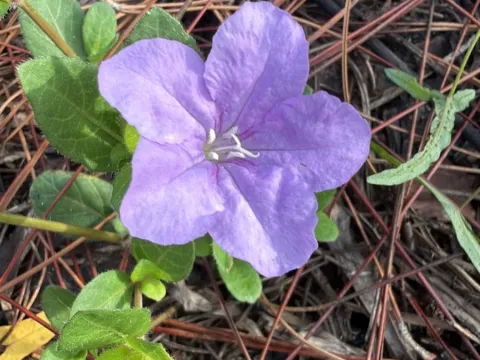
Carolina wild petunia
Ruellia caroliniensis
Carolina wild petunia (Ruellia caroliniensis) is a herbaceous perennial belonging to the Acanthaceae family. It is native to the southeastern United States, typically found in dry to moist woodlands and open clearings.
What the section contains
Carolina wild petunia
The plant thrives in well-drained, fertile soil. It exhibits high adaptability to various light conditions, performing best in full sun to partial shade, which encourages more prolific blooming during the summer months.
Regarding climate, it is a hardy species that tolerates a range of temperatures. However, consistent soil moisture is crucial during the active growing season to maintain plant vigor and foliage density.
Propagation is primarily achieved through seeds or by dividing mature root clumps in early spring. Minimal maintenance is required, though occasional deadheading can help keep the plant looking tidy and prevent over-seeding.
This species is highly valued in native landscaping for its ability to attract pollinators, including bees and butterflies, contributing to ecological health in garden ecosystems.
The primary threats to Ruellia caroliniensis include fungal diseases such as leaf spots, which often develop under conditions of high humidity and poor air circulation.
Insect pests such as spider mites and aphids are common concerns. These pests often congregate on the undersides of leaves, causing yellowing and a general decline in plant health.
Integrated pest management strategies, such as introducing beneficial insects and using horticultural oils, are recommended to control infestations without damaging the plant.
Ensuring proper spacing between individual plants is the most effective cultural method to prevent the spread of fungal pathogens and maintain optimal plant health.
Regular monitoring of the growing site allows for early detection of potential outbreaks, enabling quick intervention and ensuring the longevity of the plant population.