
Barleria rotundifolia
Barleria rotundifolia
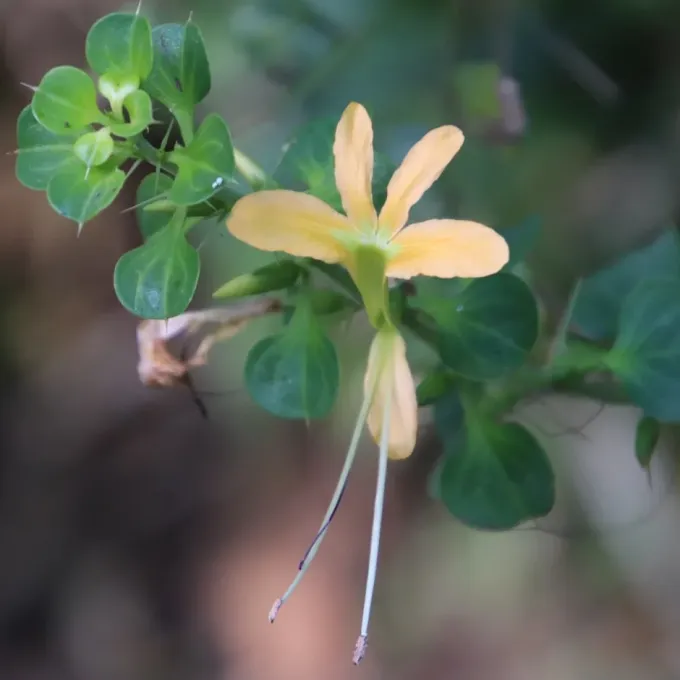
Description
Growing requirements
Barleria rotundifolia is a perennial plant species belonging to the Acanthaceae family. It is native to tropical climates where it thrives in shaded or semi-shaded environments, benefiting from stable environmental conditions and high relative humidity.
Botanically, this plant is characterized by its distinctively rounded leaves and flexible stem structure. These features allow it to maintain a lush appearance and provide rapid coverage in suitable environmental conditions, making it an interesting subject for botanical study.
The agronomic requirements for Barleria rotundifolia focus on well-draining, nutrient-rich soil substrates with a slightly acidic to neutral pH balance. It is critical to avoid waterlogging, as the root system is susceptible to decay if the soil remains excessively moist for long periods.
Regarding climate, the plant requires constant warmth, ideally between 20°C and 28°C. It is not cold-hardy, and any significant exposure to frost or temperatures below 10°C will result in severe plant damage or dormancy that may be difficult to recover from.
In terms of economic and practical use, this species is primarily valued as an ornamental plant. It is widely used in landscape projects in tropical regions and as an indoor potted plant due to its unique foliage and relatively low maintenance needs under greenhouse conditions.
Main diseases and pests
The most common pests affecting this culture include spider mites and aphids, which are particularly prevalent in dry indoor environments. Integrated pest management strategies, including the use of neem oil or insecticidal soaps, are recommended for control.
Fungal infections, such as root rot and leaf spot, are the primary disease threats caused by poor air circulation or over-watering. Ensuring proper spacing between plants and maintaining a regular, measured irrigation schedule is essential for disease prevention.