
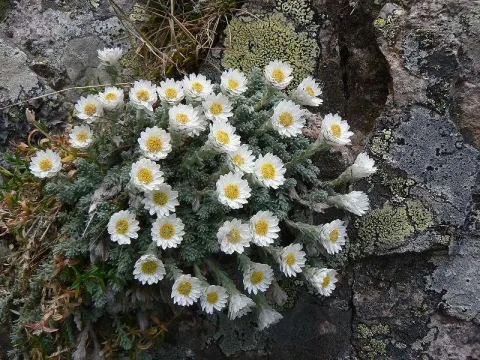
Castroviejoa
Casttroviejoa
Sowing Castroviejoa seeds requires strict adherence to temperature regimes, as this culture is a typical high-altitude endemic. The optimal period for starting the sowing process is early spring, when nighttime temperatures cease to drop to critical sub-zero levels.
What the section contains
Castroviejoa
In protected ground or greenhouse conditions, seeds are sown into a nutrient-poor, well-draining substrate with a high content of inorganic particles like perlite or fine gravel. The depth of sowing should not exceed a few millimeters, as the seedlings are extremely sensitive to the density of the soil layer.
Seed stratification is a mandatory stage that mimics natural high-altitude cycles. Without preliminary cooling, seeds exhibit an extremely low germination rate, making this agrotechnical technique key for obtaining high-quality seedlings.
Once the first true leaves appear, plants are pricked out into individual pots to prevent damage to the taproot. Castroviejoa reacts very negatively to transplanting, so this work should be performed using the transfer method, preserving the integrity of the soil clump.
Planting in open ground is possible only after the plants have fully adapted to external conditions, usually in late May or early June. The spacing between individual plants should be at least 30-40 centimeters to ensure sufficient air circulation.
Castroviejoa belongs to the Asteraceae family and is found in nature exclusively in specific high-altitude ecosystems of the Iberian Peninsula. The plant has high requirements for insolation and light exposure.
The culture prefers stony, well-drained limestone soils with a neutral or slightly alkaline reaction. Heavy clay soils are completely unsuitable for cultivation, as stagnant moisture at the root collar inevitably leads to the plant's death.
Climatic preferences include moderate summer temperatures and low air humidity. The plant does not tolerate high humidity during hot weather, which is a limiting factor for cultivation in many regions.
Watering must be strictly controlled, preferably using bottom or drip methods to avoid getting water on the pubescent foliage. Regular monitoring of substrate moisture levels helps avoid physiological disturbances in vegetative development.
During the growing season, Castroviejoa requires minimal fertilization, as excess nitrogen causes excessive shoot elongation and a decrease in natural immunity. Applying complex mineral compositions with microelements at half dosage is sufficient.
The agricultural use of Castroviejoa is limited to decorative purposes and biodiversity conservation in rock gardens and botanical collections. Large-scale industrial production of biomass or seed crops is not currently economically viable.
When all agrotechnical conditions are met, one plant can form a compact, dense rosette of leaves and several flowering stalks. Productivity depends heavily on the climatic stability of the growing region and the absence of sharp moisture fluctuations.
Seed yield in artificial conditions remains moderate, requiring manual harvesting and sorting. Since the culture is endemic, the bulk of the seed material obtained is used for land reclamation or exchange between specialized farms.
Expected harvest volumes are limited by the biological development cycle of the plant, which requires 2–3 years to form a mature, fully flowering specimen. Intensification of yields through growth stimulants is not recommended due to the risk of losing specific characteristics.
The general assessment of the culture's yield is limited to qualitative indicators of decorative value and seed viability rather than quantitative weight criteria. Consistent care allows for obtaining viable seed material over several years.
The main enemy of Castroviejoa is fungal root diseases caused by waterlogged soil. Root rot can completely destroy plantings in a few days if proper drainage is not provided.
In closed ground conditions, infestation by spider mites, which actively multiply in dry and warm air, is possible. Upon detecting the first signs of the pest, treatment with specific acaricides should be carried out.
Powdery mildew also poses a danger if ventilation regimes in greenhouses are violated or during high-humidity summer months. Preventive treatments with systemic fungicides help minimize the risks of losing the plants' commercial appearance.
Pests such as aphids can attack young flower stalks, sucking sap and inhibiting the overall development of the culture. Regular inspection of terminal shoots allows for early problem detection and the implementation of containment measures.
Failure to maintain the temperature regime during winter dormancy can lead to physiological dehydration of shoots, weakening the plant's immunity against secondary infections. Proper wintering in dry conditions is the key to Castroviejoa's health.
Harvesting Castroviejoa seeds is carried out during the period of their full biological maturity, when the flower stalks acquire a characteristic dry shade. It is important to harvest the material before it naturally disperses during wind gusts.
For harvesting, use sharp pruning shears or a knife to cut the flower stalks at the base of the rosette. Collected material should be dried in a dry, well-ventilated room under diffused sunlight, avoiding direct ultraviolet rays.
After drying, seeds are carefully separated from the inflorescences through manual threshing and subsequent winnowing. Cleaning of plant debris is an important stage to prevent mold development during subsequent storage.
Seed storage is carried out in airtight paper or cloth bags at a consistently low temperature. High humidity during storage critically reduces germination, so the use of silica gel in storage containers is a justified measure.
Harvesting times depend on the geographical location of the farm and can vary from late July to mid-August. Determining readiness for harvest is done visually by the change in seed color and their easy detachment from the head.