
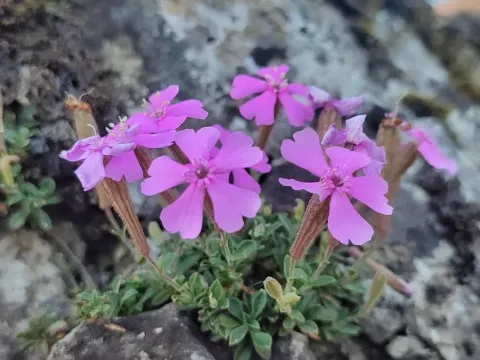
Caucasian campion
Silene schafta
Silene schafta is typically propagated through seeds or vegetative methods. Sowing seeds in containers with a light, nutrient-rich substrate in March or April allows for flowering plants within the first year.
What the section contains
Caucasian campion
In open ground conditions, seeds can be sown before winter or early spring when the soil temperature reaches 10–12 degrees Celsius, ensuring optimal contact between seeds and soil for uniform germination.
For vegetative propagation, dividing the root clump is most effective in early spring or at the end of the summer season, immediately after the primary flowering cycle concludes.
Cutting propagation is carried out during the summer using young, healthy shoots that root quickly in greenhouse conditions or under protective cover while maintaining moderate humidity levels.
The choice of propagation method depends on cultivation goals; however, for establishing a dense flowering ground cover, starting from seedlings or dividing mature plants is highly recommended.
Silene schafta, a member of the Caryophyllaceae family, thrives best in well-lit locations with ample direct sunlight, although it can tolerate light partial shade during the hottest parts of the day.
The species has moderate soil requirements, preferring loose, well-drained loams or sandy soils with a neutral or slightly alkaline pH level to ensure healthy root development.
The plant is highly drought-tolerant but is sensitive to waterlogged conditions; therefore, proper drainage is essential, especially when planting in heavier clay-based soils.
While the plant requires moderate watering during its active growing season, it is crucial to ensure consistent moisture during the bud formation phase to maintain the overall vigor and decorative quality.
The plant exhibits excellent winter hardiness, allowing it to survive in temperate climates without additional protective covering, provided that meltwater is efficiently diverted in the spring.
The primary threats to Silene schafta are fungal diseases that thrive in overly humid environments, such as powdery mildew and various types of leaf spot pathogens.
If fungal infections appear, it is recommended to apply broad-spectrum fungicides immediately and improve air circulation around the plants to prevent the further spread of spores.
Regarding pests, leaf rollers and aphids pose the greatest risk, as they can damage young shoots and developing flower buds, significantly detracting from the plant's aesthetic appearance.
Preventive measures include regular inspection of foliage, maintaining adequate spacing between plants to encourage airflow, and removing weeds that may harbor pests or disease.
In instances of severe pest infestation, the use of systemic insecticides is necessary, strictly adhering to the manufacturer's guidelines regarding dosage and the frequency of application.