
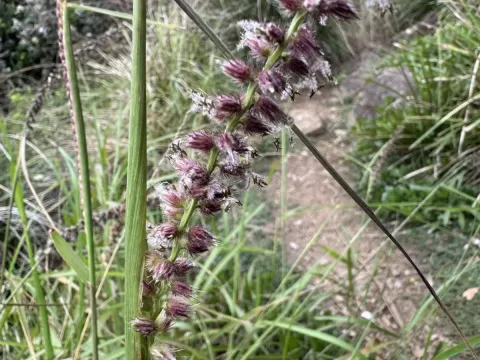
Cenchrus australis
Cenchrus australis
Cenchrus australis is a perennial grass species belonging to the Poaceae family, widely recognized for its robust growth in temperate to subtropical climates. Successful stand establishment relies on sowing the seeds in well-prepared, friable soil during the onset of the growing season when temperatures are consistently warm.
What the section contains
Cenchrus australis
The optimal germination temperature for this species typically ranges between 15°C and 20°C. Sowing depth should be shallow, generally between 1 and 2 centimeters, to ensure that the small seeds have adequate energy to push through the soil surface without desiccating.
Spacing between rows should be carefully managed, typically ranging from 30 to 45 centimeters depending on the intended use, whether for grazing or hay production. This spacing minimizes competition for resources while allowing for mechanical weed control in the early growth stages.
Compaction of the soil after sowing is a critical agronomic practice for Cenchrus australis. Ensuring the seed has firm contact with the soil profile significantly improves moisture uptake, which is vital for achieving uniform stand emergence and preventing patchy crop development.
The initial establishment phase usually spans two to four weeks. During this time, it is essential to keep the upper soil profile moist to support the developing root system. Once the plants reach the tillering stage, their reliance on frequent irrigation decreases as they begin to express their drought-tolerant characteristics.
Cenchrus australis thrives in well-drained soil environments and is particularly adapted to sandy or loamy textures that prevent waterlogging. The species is highly sensitive to root saturation; therefore, site selection must prioritize areas with excellent natural drainage to ensure long-term plant survival.
As a C4 photosynthetic plant, it has a high demand for solar radiation. It performs best in open, sunny locations and does not tolerate competition from overhanging tree canopies or dense brush. Its ability to utilize high light intensity makes it an efficient biomass producer during summer months.
Drought tolerance is a hallmark of Cenchrus australis. It is morphologically and physiologically adapted to withstand periods of low rainfall by efficiently managing water storage and utilizing metabolic pathways that minimize moisture loss through transpiration.
Soil nutrient requirements for this grass are moderate. While it can persist in soils with low fertility, its biomass yield and crude protein content significantly improve with strategic applications of nitrogen and phosphorus fertilizers, particularly after grazing or harvesting events.
The ideal pH range for this species is slightly acidic to neutral (6.0–7.5). In soils with highly acidic profiles, growth may be stunted, and nutrient uptake inhibited, necessitating soil amendment techniques such as liming prior to establishing a long-term grazing pasture.
The primary agricultural utility of Cenchrus australis lies in its role as a high-quality forage crop. It is valued for its persistence in pastures and its ability to provide steady feed for livestock during seasonal gaps when other grass species might struggle with heat or moisture stress.
Yield potential is optimized through rotational grazing management. This approach prevents overgrazing and allows the plant reserves to replenish, ensuring that the pasture maintains high nutritional quality and density over several years of utilization.
For hay production, timing is essential. The crop should be harvested at the early boot stage or just before full flowering. This timing captures the best balance between total dry matter production and the nutrient density, particularly the protein content required for livestock maintenance.
With proper agronomic support, including fertilization and weed management, Cenchrus australis can sustain multiple harvest cycles per year. The yield consistency makes it a reliable asset for livestock farmers seeking to maintain predictable forage supplies throughout the main growing season.
Longevity is a key economic factor for this species. When managed correctly, a well-established stand can remain productive for many years, significantly reducing the costs associated with frequent re-seeding and land preparation in intensive forage production systems.
Fungal diseases, particularly rusts, can affect Cenchrus australis, especially during periods of high humidity and prolonged rainfall. These pathogens impact the photosynthetic surface area, leading to reduced vigour and lower overall dry matter yields across the affected pasture sections.
Insect pests, such as locusts and various grass-feeding larvae, pose a threat to the vegetative canopy. Significant infestations require monitoring, and in severe cases, integrated pest management strategies are necessary to prevent rapid defoliation and long-term stand degradation.
Weed encroachment is a primary threat in thinner stands. Since the plant requires significant sunlight, any invasion by competitive broadleaf weeds can suppress the grass's growth and reduce the overall grazing value of the field, necessitating timely herbicide application or manual removal.
Biotic stress can be mitigated by maintaining a strong, healthy stand through sound grazing practices. A robust, well-fertilized plant is generally more resistant to disease pressure and can recover more effectively from minor pest damage compared to plants under nutrient stress.
Regular field scouting is essential for proactive management. Early detection of disease or pest hotspots allows for localized interventions, which are more cost-effective and environmentally friendly than broad-spectrum chemical controls applied to an entire field.
Harvesting strategies for Cenchrus australis must balance biomass volume with nutritional quality. Delaying the harvest into the reproductive stage leads to rapid accumulation of structural carbohydrates like lignin, which significantly lowers the forage digestibility for ruminants.
When using mechanical harvesters, the cutter bar height should be set to leave at least 5–7 centimeters of stubble. This protects the crown and basal buds, which are essential for the rapid regrowth of shoots in the subsequent growth cycle after the field has been cleared.
Efficient moisture removal is crucial for hay storage. Using tedders to turn and spread the windrows accelerates the drying process, reducing the risk of microbial growth or spontaneous heating in the bales, which would otherwise degrade the feed quality.
Post-harvest care is vital for maintaining high yields. Applying a light application of nitrogen fertilizer immediately following a harvest event stimulates the plants to resume vegetative growth quickly, ensuring that the pasture returns to optimal grazing density within a shorter timeframe.
At the end of the final growth cycle before winter dormancy, ensuring an adequate stubble height is important for cold hardiness. This vegetation acts as a thermal buffer and helps the plant store necessary energy reserves in its roots, facilitating a strong spring wake-up.