
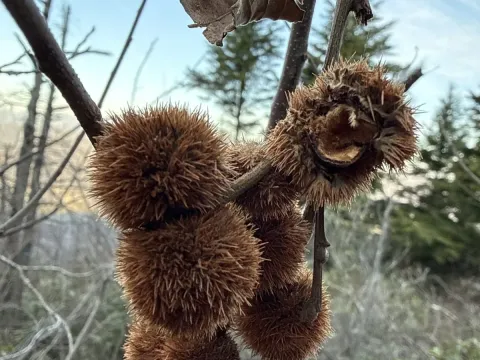
Trailing chinkapin
Castanea alnifolia
The trailing chinkapin (Castanea alnifolia) is a distinctive shrubby species belonging to the Fagaceae family. It is recognized for its low-growing or spreading habit, often forming dense thickets in its native environment.
What the section contains
Trailing chinkapin
This species is native to the southeastern United States. It naturally thrives in acidic, well-drained soils, often occupying sandy or rocky habitats that are challenging for larger deciduous trees.
The plant requires full sun to partial shade for optimal growth. It is relatively adaptable to various soil textures, provided that the drainage remains excellent and the soil pH is kept slightly acidic.
Cultural practices include providing consistent moisture during the establishment phase. Once the root system is well-developed, the plant shows a degree of tolerance to drier periods, characteristic of its natural habitat.
Economically, the trailing chinkapin is valued primarily as an ornamental plant for rock gardens or shrub borders. It also serves as a niche genetic resource for chestnut breeders looking for low-stature, cold-hardy traits.
The most severe biological threat to Castanea alnifolia is chestnut blight, caused by the fungus Cryphonectria parasitica, which can cause significant stem dieback.
Pests such as the chestnut gall wasp (Dryocosmus kuriphilus) pose a serious risk, as they induce galls on leaf buds and stems, hindering the plant's normal growth and development.
Weevil infestation in the nuts is a common concern for growers. Effective management involves picking up fallen nuts promptly and using appropriate biological control agents when necessary.
To maintain plant health, it is essential to monitor for signs of fungal lesions on the bark and ensure proper air circulation to prevent excessive humidity around the foliage.
Sanitation measures, including the pruning and destruction of infected wood, are critical strategies to limit the spread of pathogens within a planting site.