
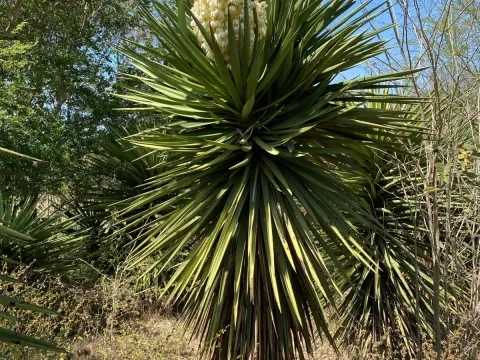
Torrey's yucca
Yucca torreyi
Torrey's yucca is propagated primarily through seeds or by dividing the root offshoots generated by the mother plant.
What the section contains
Torrey's yucca
Sowing in controlled environments such as greenhouses is recommended in early spring to ensure optimal temperatures for germination.
Vegetative propagation involves careful separation of suckers, which should be planted into well-draining soil once the danger of frost has passed.
Planting locations must be selected based on their exposure to full sunlight, which is critical for the vigorous development of the plant.
In a farm setting, spacing between individuals is essential to prevent overcrowding and ensure adequate airflow, which reduces the risk of disease.
Yucca torreyi belongs to the Asparagaceae family and is native to the arid landscapes of the southwestern United States and northern Mexico.
This species is uniquely adapted to high-temperature and low-water environments, utilizing its deep root system to access moisture.
Soil quality is paramount; the plant requires coarse, well-draining soil and fails in heavy, water-logged conditions that cause root rot.
The climate must be arid or semi-arid, characterized by intense heat and low humidity levels throughout most of the growing season.
While mature plants are resistant to sporadic frost, juvenile plants require protection from extreme cold to ensure successful establishment.
The most significant threat to Torrey's yucca is fungal root rot, which typically develops due to over-irrigation or improper soil drainage.
Pests such as mealybugs can pose a serious challenge, feeding on the succulent tissues and weakening the plant's structural integrity.
Spider mites are also common in environments with extremely dry air, often leading to discoloration and necrosis of the foliage.
Management strategies include applying organic pesticides when needed and ensuring that the planting site remains free from stagnant water.
Regular inspections are necessary to identify early signs of infestation and to remove any dead or dying leaf tissue promptly.