
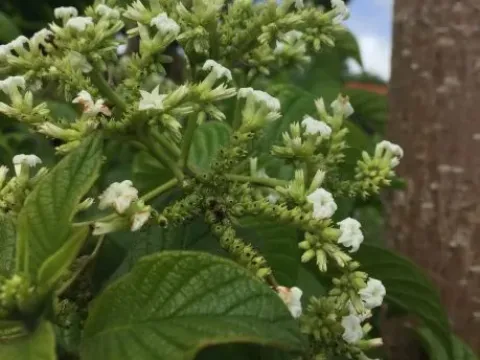
Tournefortia hirsutissima
Tournefortia hirsutissima
Tournefortia hirsutissima is a member of the Boraginaceae family. It is a perennial tropical plant that typically grows as a woody shrub or a climbing vine depending on the environment and available support.
What the section contains
Tournefortia hirsutissima
The species originates from the tropical regions of Central and South America, including various islands in the Caribbean. It thrives in humid tropical forest environments where rainfall is abundant throughout the year.
Cultivation requires well-drained, nutrient-rich soils with moderate acidity. The plant is extremely sensitive to cold and requires a consistent temperature range to sustain its metabolic functions.
Its botanical defining feature is the dense, hirsute (hairy) texture of its foliage and stems. These hairs act as a protective layer against mechanical damage and help regulate the microclimate around the leaf surface.
Economic use of this plant is largely centered on its traditional medicinal properties. Indigenous communities have historically used preparations from the plant to treat various inflammatory and skin-related conditions.
Fungal pathogens are the primary threat, particularly in environments with high humidity and poor air circulation. Botrytis and various leaf spots can compromise the foliage quality significantly.
Spider mites are notorious pests for this species. They thrive in the dense hair cover of the leaves, making them difficult to detect and eradicate without specialized horticultural oils or soaps.
Root rot, often caused by Pythium or Phytophthora species, poses a lethal threat to the plant if the soil remains waterlogged for extended periods. Proper drainage is the single most important management factor.
Aphids can cause significant damage to the new, tender shoots, leading to stunted growth and leaf curling. Integrated pest management using biological predators is often successful in protected cultivation.
Viral infections transmitted by whiteflies are a concern in open-field tropical farming. Maintaining strict field hygiene and monitoring for insect vectors is essential to prevent the spread of systemic diseases.